Why Do Steelmakers Buy Ferro Niobium, and What Makes a Lot Off-Grade?
Niobium does a lot with very little. A few hundredths of a per cent in a plate or strip steel pins grain boundaries during rolling, giving a finer grain and markedly higher strength without extra carbon. That is the basis of high-strength low-alloy steel for line pipe, bridges, ship plate and vehicle bodies. In stainless steels such as Type 347 and some ferritic grades, niobium ties up carbon so that chromium stays in solution near welds. Ferro niobium is the usual way it enters the melt, and ASTM A550 is the common reference specification.
The product comes in two grades that should never be confused. Standard grade, around 65% niobium, is made by aluminothermic reduction of pyrochlore concentrate and goes to carbon and stainless steel plants. Vacuum grade is refined further for nickel-base superalloys such as Inconel 718, where aluminium, silicon, oxygen and tramp metals must be held very low. A vacuum grade lot that loses its paperwork or is mixed with standard material is, in practice, standard grade.
Ferro niobium sold as "scrap" is nearly always unused alloy. Crushing produces fines below the ordered band; lots arrive a little under contracted niobium or above an impurity limit; and a mill that changes its product mix, or closes a line, sells the bags it no longer needs. Tantalum, which occurs with niobium in nature, is reported on most certificates and can matter to superalloy buyers.
Ferro niobium sits alongside ferro vanadium as a microalloying addition; see the full ferro alloy scrap range and our overview of ferro alloy types.
Typical Composition
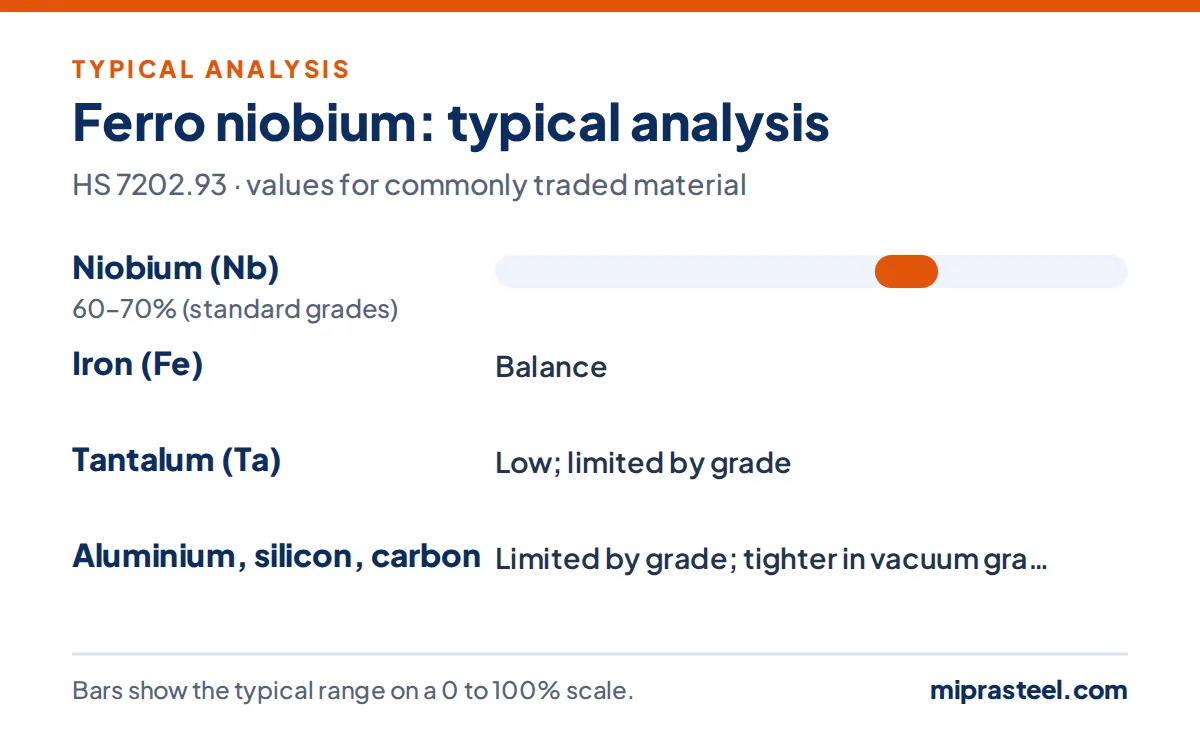
| Element or property | Typical value |
|---|---|
| Niobium (Nb) | 60–70% (standard grades) |
| Iron (Fe) | Balance |
| Tantalum (Ta) | Low; limited by grade |
| Aluminium, silicon, carbon | Limited by grade; tighter in vacuum grades |
Typical values for commonly traded material. The certificate or analysis of each lot governs.
Forms Ferro Niobium Scrap Comes In
- Lumps
- Crushed sizes
- Fines
- Off-grade lots
- Part-used drums and bags
Where Ferro Niobium Is Used
- High-strength low-alloy (HSLA) steels
- Pipeline and structural steels
- Stabilised stainless steels
- Heat-resistant steels
- Nickel-base superalloys (vacuum grade)
What Buyers Check in a Lot
Niobium Content
Niobium is the paying element, and the lot is described by its measured percentage.
Standard or Vacuum Grade
Vacuum grade material has tighter impurity limits and suits different buyers, so the grade should be stated.
Tantalum
Tantalum often accompanies niobium and is reported separately.
Aluminium, Silicon and Carbon
These are limited by grade, and carbon needs laboratory analysis.
Size and Fines
Lots are described by size range and fines share.
Sampling and Analysis
A representative sample across the lot, analysed by XRF or a laboratory, supports the description.
How to Recognise Ferro Niobium
Ferro niobium looks like other grey ferro alloys. The analysis and the grade on the certificate identify it.
| Check | What it shows for Ferro niobium |
|---|---|
| Niobium by XRF or wet chemistry | Gives the niobium percentage the lot is paid on and separates it at once from ferro vanadium or ferro titanium. |
| Tantalum | Read alongside niobium; some specifications cap it and superalloy buyers want it stated. |
| Aluminium and silicon | Residues of the aluminothermic process; tighter limits mark vacuum grade. |
| Carbon, phosphorus and sulfur | Laboratory analysis is needed for carbon; all three are reported on a full certificate. |
| Grade evidence | Standard and vacuum grade look identical, so the producer certificate and bag marks carry real weight. |
| Size and fines | A sieve test shows the band and how much material passes the bottom screen. |
Grades Most Often Confused with Ferro Niobium
- Ferro vanadium: used for the same microalloying job and looks similar, but XRF shows vanadium, not niobium.
- Ferro titanium: also grey and brittle and used in steel deoxidation and stabilisation; lighter, and titanium-rich on XRF.
- Nickel-niobium master alloy: an alternative niobium carrier for superalloys; XRF shows a nickel balance instead of iron.
Grey and Brittle
Ferro niobium looks much like other ferro alloys, so appearance alone does not identify it.
Not Ferro Vanadium
Ferro niobium and ferro vanadium are both used for microalloying and can look similar; XRF separates them quickly.
Grade Needs Paperwork
Standard and vacuum grades can look identical, so the certificate or a full analysis is needed to tell them apart.
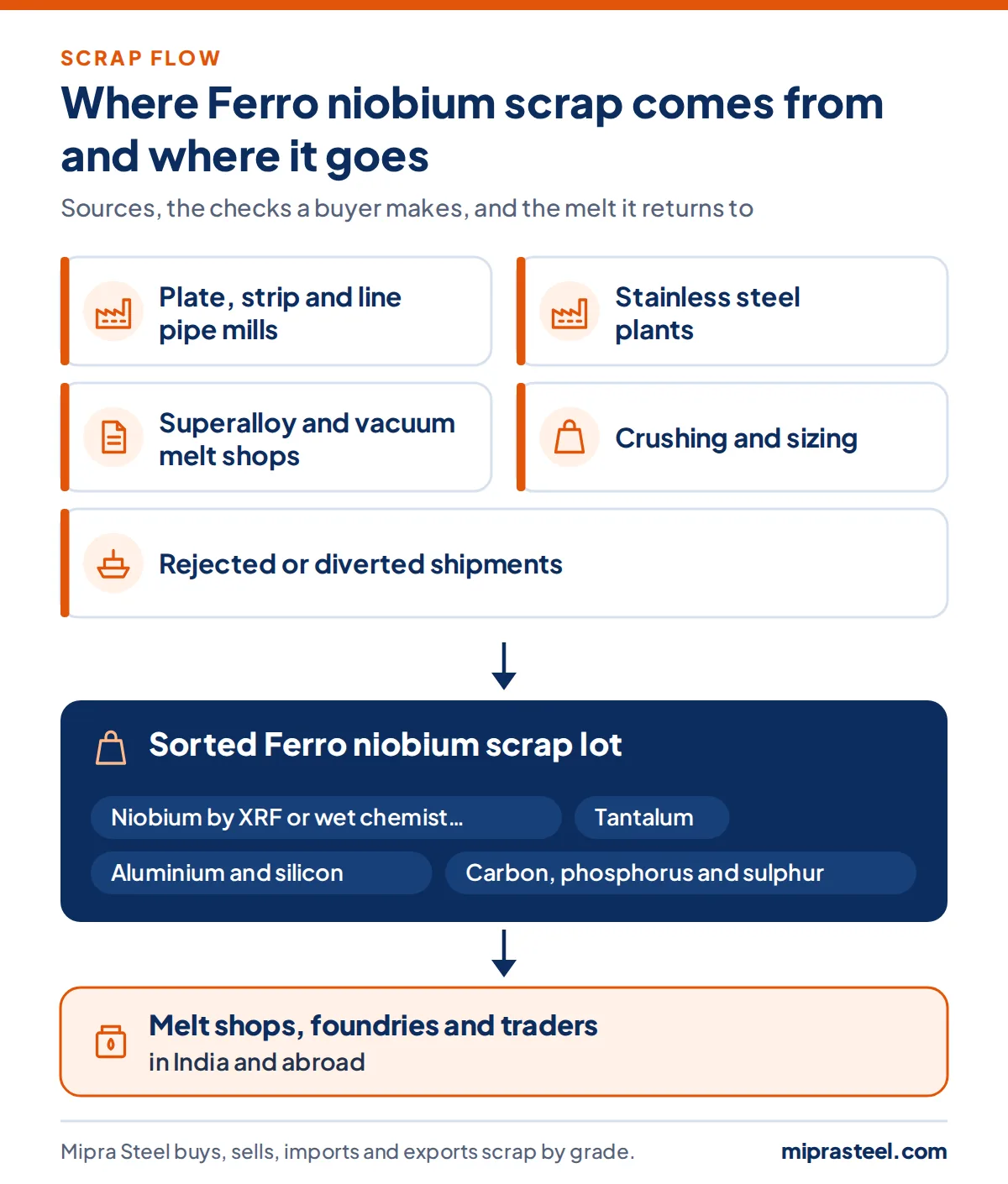
Where Ferro Niobium Scrap Comes From
Because steel plants add ferro niobium in small amounts, part-used and surplus material builds up slowly and comes to market in occasional lots.
Plate, Strip and Line Pipe Mills
HSLA producers hold FeNb near the ladle; grade changes and closures leave surplus bags and drums.
Stainless Steel Plants
Niobium-stabilised grade campaigns leave part-used containers when they end.
Superalloy and Vacuum Melt Shops
Vacuum grade remnants, opened containers and material past its certificate date.
Crushing and Sizing
Undersize and fines from producing a contracted 10 to 50 mm or similar band.
Rejected or Diverted Shipments
Lots refused for niobium below contract, impurity excess or size, and resold on a fresh analysis.
Ferro Niobium Scrap Buyer, Importer and Exporter in India
From its Khetwadi, Mumbai office, Mipra Steel purchases surplus and below-specification ferro niobium and places it with HSLA, stainless and alloy steel producers, each lot described by analysis.
Sell Ferro Niobium Scrap
To offer ferro niobium, tell us whether it is standard or vacuum grade, the niobium, tantalum, aluminium and silicon figures from the certificate or a recent analysis, the size band, quantity, packing and location. Photograph the material, the drums or bags and every label. Lots that have been opened or repacked should say so. We review incoming enquiries and respond with relevant next steps.
Buy Ferro Niobium Scrap
HSLA and stainless producers, foundries and alloy makers looking for ferro niobium should give the grade, minimum niobium, maximum tantalum, aluminium and phosphorus, the size band and tonnage. Fines and off-grade material can be a practical source for trim additions where lump size does not matter, and each lot is described from its analysis.
Preparing Ferro Niobium Scrap for Sale
- Keep vacuum grade and standard grade in separate, clearly labelled containers.
- Store ferro niobium apart from ferro vanadium and ferro titanium, which look the same.
- Screen fines from lump material and weigh them separately.
- Sample across several containers for niobium, tantalum and impurities.
- Keep the producer certificate with the lot and photograph every label.
Ferro Niobium Scrap Price per Kg: What Decides It
Ferro niobium is valued on its niobium units, with the grade and impurity profile deciding which buyers can use it.
- Contained niobium: the measured percentage times net weight is where every offer begins.
- Grade: documented vacuum grade suits superalloy melting and is a separate market from standard grade.
- Tantalum, aluminium and silicon: values outside specification move a lot down a grade or narrow its buyers.
- Phosphorus, sulfur and carbon: high readings rule out some HSLA and stainless uses.
- Size and fines share: lump material charges cleanly; fines are discounted unless the buyer wire-feeds or blends.
- Packing and moisture: sealed drums and dry bags keep a lot sellable; damaged packing invites testing and deductions.
Most of the world's niobium comes from Brazil and is sold mainly on contract, so a spot ferro niobium price for an off-grade lot depends on its analysis and the day's offers. Our ferro alloy valuation guide sets out the method.
Ferro Niobium Scrap Import and Export
Importing Ferro Niobium Scrap into India
India has no significant niobium production, so steelmakers depend on imported ferro niobium, most of it ultimately from Brazil, and imported surplus and off-grade lots add to that. Ferro niobium is typically classified under HS 7202.93; confirm the national line with your customs broker. Consignments travel with the producer or independent analysis, commercial invoice, packing list and bill of lading, and remnant lots also follow pre-shipment inspection practice for imported scrap. Most arrive at Nhava Sheva, Mundra or Chennai. See India import procedure.
Exporting Ferro Niobium Scrap from India
Surplus ferro niobium held by Indian mills and traders can be re-exported to steel and alloy producers in the Gulf, East Asia and Europe. Lots are invoiced with niobium and impurity figures, grade, size band and net weight, packed in sealed drums or jumbo bags and shipped in containers. Our Dubai office serves Gulf buyers including Saudi Arabia, and our South Korea office covers East Asia. See export documents.
Customs heading: 7202.93. The HS code is the international tariff heading the scrap is declared under; national tariff lines add further digits, so confirm the full line with your customs broker.
Related Reading
Ferro Niobium Scrap FAQ
What is ferro niobium used for?
Mainly microalloying HSLA steels for line pipe, structural plate and vehicles, where tiny niobium additions refine grain and raise strength. It also stabilises stainless grades such as Type 347, and vacuum grade material goes into nickel-base superalloys.
Is ferrocolumbium the same as ferro niobium?
Yes. Columbium is the older American name for niobium, so ferrocolumbium and ferro niobium are the same product. ASTM A550 still carries both names in its title.
What is the difference between standard and vacuum grade ferro niobium?
Vacuum grade is refined to much lower aluminium, silicon, oxygen and tramp element levels for superalloy and other critical melts. Standard grade, around 65% niobium, serves carbon and stainless steel. They look alike, so only the certificate or a full analysis tells them apart.
Why is tantalum reported on a ferro niobium certificate?
Tantalum and niobium occur together in ore and behave alike chemically, so a little tantalum can remain in the alloy. Superalloy buyers and some specifications limit it, so it is reported even when it is low.
What HS code applies to ferro niobium remnants and fines?
Ferro niobium in any form, including off-grade and fines, is typically declared under HS 7202.93. National tariff lines add digits, so a customs broker should confirm the exact code before shipment.
Will Mipra Steel consider old or opened ferro niobium drums?
Yes. Opened and long-stored containers can be offered if they are described honestly. Tell us the number of containers, how full they are, how they were stored and whether the original certificate is available, and send photographs.
Published by Mipra Steel, Khetwadi, Mumbai · Updated