What Makes Tungsten Scrap "Pure", and Why Does It Matter Who Buys It?
Pick up a rod of pure tungsten and the weight surprises you: it is about two and a half times as heavy as steel of the same size. Add a melting point above 3,400°C, the highest of any metal, and you have the reason it is used in vacuum furnace hot zones, lamp and electron-tube filaments, X-ray targets, crucibles and welding electrodes. Nearly all of it is made by pressing and sintering powder, then forging, rolling or drawing it, so mill products come with a known purity, usually 99.95% tungsten.
The word "pure" is doing real work in a lot description. Four tungsten materials circulate in the same scrap market. Plain tungsten metal is one. Tungsten carbide is a cemented hard material with a cobalt or nickel binder. Heavy alloy is roughly 90 to 97% tungsten held together by nickel-iron or nickel-copper, and it goes into counterweights and radiation shields. Ferro tungsten is a steelmaking addition with an iron balance. Each has a different recycling route and a different set of buyers, so a few kilograms of the wrong one in a drum can change what the whole drum is worth.
Electrodes need special care. Pure tungsten TIG electrodes, used mainly for AC welding of aluminium, are coded green under AWS A5.12. Most others carry a small oxide addition: ceria, lanthana, zirconia or thoria. Thoriated electrodes, coded red, contain a radioactive element, and many recyclers will only accept them as a separate, declared lot. That single point is behind many rejected shipments.
Unalloyed tungsten scrap is normally recycled chemically: it is oxidised and taken back to ammonium paratungstate, from which new powder is made. A clean, documented lot with no binder metals, oxides or foreign attachments makes that job simpler, which is what a buyer is paying for.
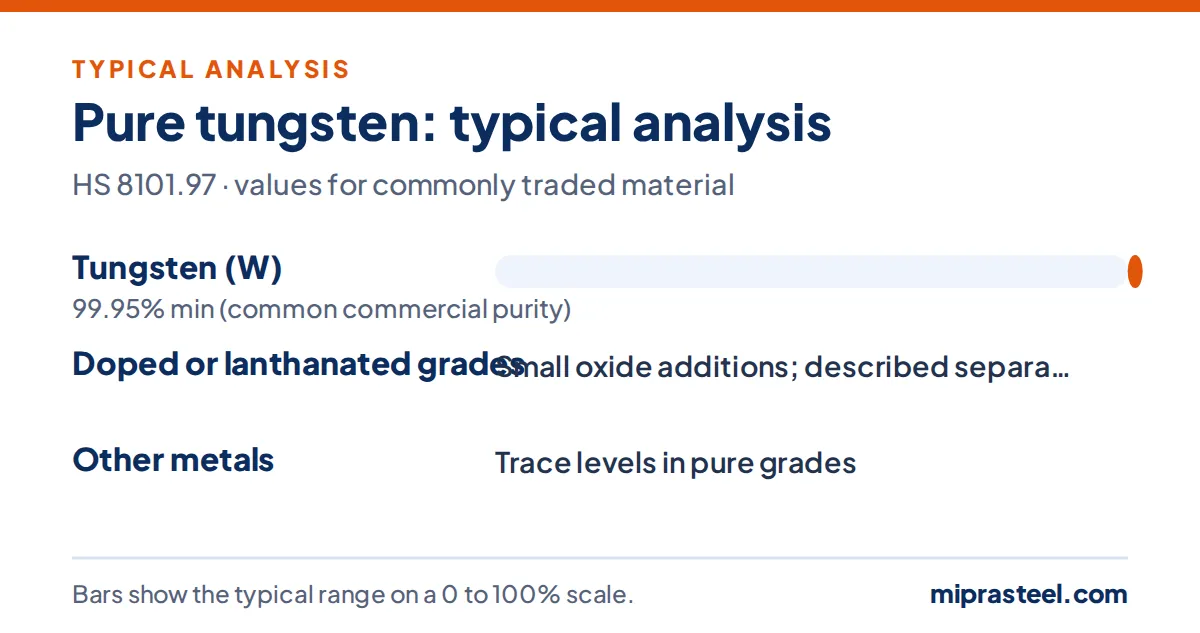
Typical Composition
| Element or property | Typical value |
|---|---|
| Tungsten (W) | 99.95% min (common commercial purity) |
| Doped or lanthanated grades | Small oxide additions; described separately |
| Other metals | Trace levels in pure grades |
Typical values for commonly traded material. The certificate or analysis of each lot governs.
Forms Pure Tungsten Scrap Comes In
- Sheet and plate offcuts
- Rod and bar ends
- Wire and filament
- Welding electrodes
- Turnings and grindings
- Furnace shields and elements
Where Pure Tungsten Is Used
- Vacuum furnace heating elements and shields
- Lamp and electronic filaments
- TIG welding electrodes
- X-ray and radiation parts
- Crucibles and high-temperature fixtures
What Buyers Check in a Lot
Purity
Pure tungsten is described by its tungsten content, confirmed by XRF.
Additions and Dopants
Electrodes and some wire carry thorium, cerium, lanthanum or other oxide additions, which are stated.
Separation from Heavy Alloy and Carbide
Heavy alloys and tungsten carbide are separate materials and should not be mixed into a pure tungsten lot.
Surface Condition
Oxide, coatings and attached metals reduce usable tungsten and are noted in the description.
Form and Size
Solids, wire, turnings and grindings are handled differently and are described separately.
How to Recognise Pure Tungsten
Weight gives the first hint; an XRF reading settles the description. These checks keep a lot clean.
| Check | What it shows for Pure tungsten |
|---|---|
| Density | At about 19.3 g/cm³, a pure tungsten piece is much heavier than carbide (about 15) or heavy alloy (roughly 17 to 18.5) of the same volume. |
| XRF for binder metals | Nickel, iron or copper on a reading means heavy alloy; cobalt or nickel with a carbide surface means cemented carbide. |
| Electrode colour bands | Green for pure tungsten. Red, gold, grey, blue or white bands point to thoria, lanthana, ceria or zirconia additions. |
| Magnet | Pure tungsten is not attracted. A weak pull suggests nickel-iron heavy alloy or steel attachments. |
| Hardness and fracture | Carbide is extremely hard and chips cleanly; sintered tungsten rod is softer and may split along its grain. |
| Attachments and coatings | Brazed molybdenum, graphite backing, ceramic insulators and steel clamps are removed or stated. |
Grades Most Often Confused with Pure Tungsten
- Pure molybdenum: Same dull grey and similar furnace parts, but about 10.2 g/cm³, so an equal-sized piece weighs only a little over half as much as tungsten.
- Tungsten carbide: About 15 g/cm³ with 3 to 30% cobalt or nickel binder on XRF; it follows a zinc or chemical recycling route of its own.
- Ferro tungsten: Around 75 to 85% tungsten with an iron balance, sold as crushed lumps to steel plants rather than as metal pieces.
Extremely Dense
At about 19.3 g/cm³, pure tungsten is roughly 2.5 times as dense as steel and nearly twice as dense as molybdenum.
Heavy Alloy May Be Weakly Magnetic
Tungsten-nickel-iron heavy alloys can be slightly attracted to a magnet, while pure tungsten is not.
Carbide Is Harder and Has a Binder
Tungsten carbide is harder, lighter at about 15 g/cm³ and shows cobalt or nickel on XRF, which pure tungsten does not.
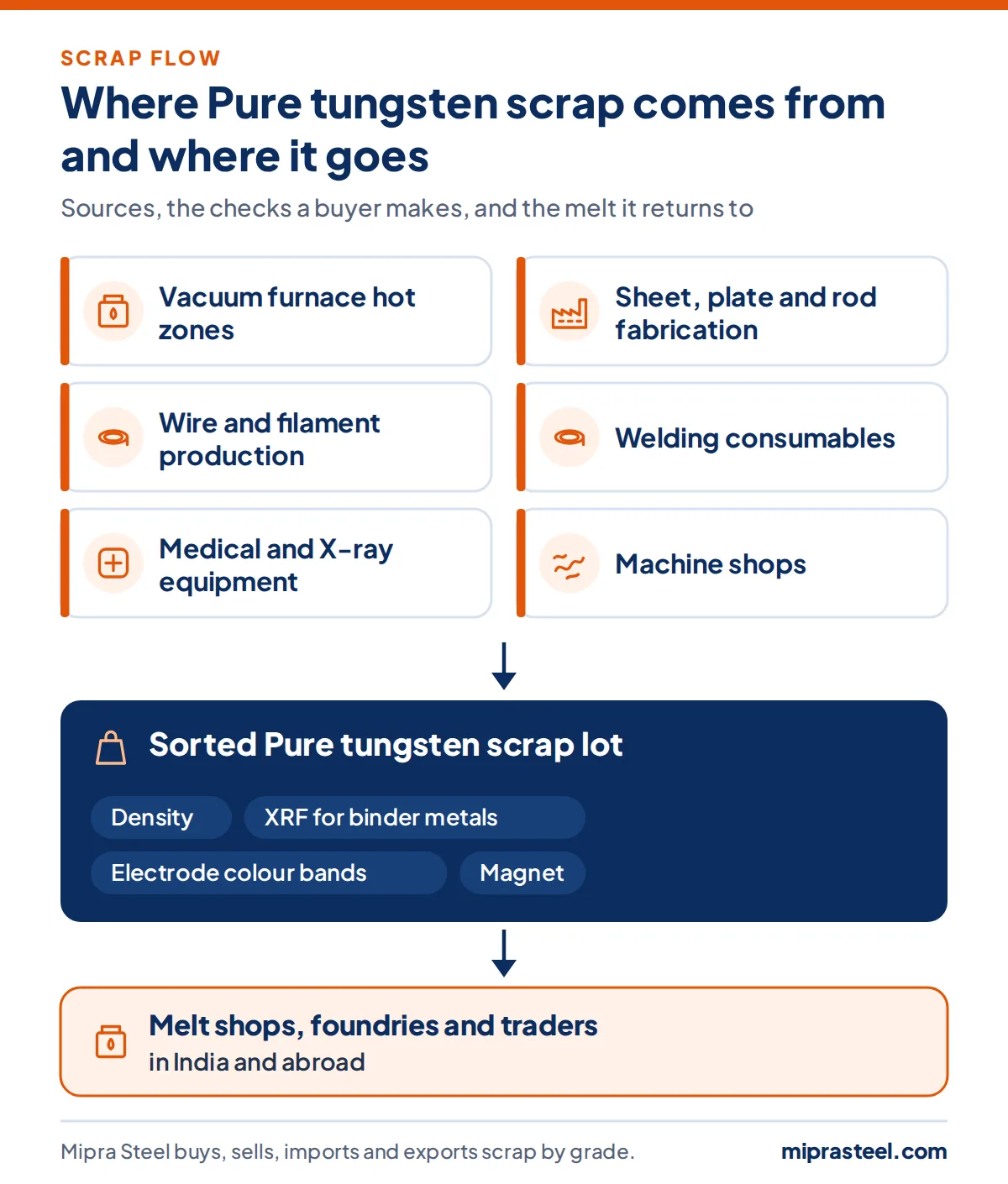
Where Pure Tungsten Scrap Comes From
Pure tungsten turns up in fewer places than carbide, and each source gives material in a recognisable shape.
Vacuum Furnace Hot Zones
Mesh and rod heating elements, radiation shields and support pins come out at relining time. They are often grey, brittle from grain growth and may carry deposits. See heat treatment and furnace scrap.
Sheet, Plate and Rod Fabrication
Cutting of blanks, boats and fixtures leaves edge trim and bar ends with the mill certificate still traceable. This is the cleanest material on the market.
Wire and Filament Production
Drawing and coiling produce broken wire, spool ends and rejected coils. Some filament wire is doped with tiny amounts of potassium, aluminium and silicon, which is stated on the lot.
Welding Consumables
Electrode makers and large fabricators release short ends, grinding stubs and rejected rods. These are sorted by colour code before anything else.
Medical and X-Ray Equipment
Rotating anodes and collimator parts can contain tungsten or tungsten-rhenium. These parts are often bonded to molybdenum or graphite, which has to be declared.
Machine Shops
Turning and grinding of tungsten produce chips and fine sludge with coolant and abrasive, which are packed and described apart from solids. Read solids vs turnings.
Pure Tungsten Scrap Buyer, Importer and Exporter in India
Mipra Steel works in pure tungsten scrap out of its Khetwadi office in Mumbai, taking material from heat-treatment shops, welding fabricators and dealers and offering described lots to recyclers and powder makers in India and overseas.
Sell Pure Tungsten Scrap
Have furnace elements, tungsten sheet trim, rod ends, wire or electrode stubs? Send photographs, the approximate weight, the form and where the material is held. Say whether electrodes are sorted by colour band and whether any thoriated rods are present. Certificates, part drawings or XRF readings help a lot with unmarked pieces. Keep heavy alloy and carbide out of the photos and the weight. We review incoming enquiries and respond with relevant next steps.
Buy Pure Tungsten Scrap
Sourcing unalloyed tungsten for chemical recovery, powder making or remelting into alloy? Tell us the purity you need, the forms you can process (solids, wire, electrode ends, chips), any limit on doped material, the quantity and your delivery port. Lots are described by tungsten content, form and surface condition, with whatever certificates or readings came with them.
Preparing Pure Tungsten Scrap for Sale
- Sort welding electrodes by colour band and bag thoriated rods on their own, clearly labelled.
- Read unmarked pieces for nickel, iron, copper and cobalt to catch heavy alloy and carbide.
- Strip molybdenum, graphite, ceramic and steel fittings from furnace and X-ray parts.
- Pack dense solids in small steel drums so each container stays within its weight limit.
- Dry chips and sludge and keep them separate from solids.
- Photograph labels, mill certificates and part numbers next to the material.
Pure Tungsten Scrap Price per Kg: What Decides It
A tungsten scrap price per kg begins with the tungsten content a buyer can rely on, then moves with how much work the lot needs before chemical recovery.
- Certainty of purity: certified mill offcuts at 99.95% W need less checking than unmarked furnace parts.
- Separation from heavy alloy and carbide: one mixed drum has to be priced for its least useful component.
- Electrode sorting: pure green-band ends kept apart from thoriated and other doped types are easier to place.
- Form: plate trim and rod ends handle more easily than fine wire, chips or grinding sludge, which carry oil, oxide and abrasive.
- Surface condition: deposits, heavy oxide and ceramic residues reduce the usable metal.
- Lot size and packing: a weighed, drummed lot at a port moves at lower cost than parts spread across workshops.
Tungsten offers follow the ammonium paratungstate market and are dated for that reason. Our guide to ferro alloy scrap value describes how contained-metal pricing works.
Pure Tungsten Scrap Import and Export
Importing Pure Tungsten Scrap into India
Pure tungsten scrap reaches India from East Asia, where lighting and electronics plants run wire and filament lines, and from Europe and the Gulf, where vacuum furnaces are relined. Imported metal scrap is inspected before shipment and travels with a pre-shipment inspection certificate, commercial invoice, packing list and bill of lading. Describe the goods plainly, for example "tungsten scrap, 99.95% W, rod and sheet offcuts", and keep thoriated electrodes off the shipment unless the buyer has agreed to them in writing. Containers mostly clear at Nhava Sheva (JNPT) or Mundra. See importing alloy scrap into India.
Exporting Pure Tungsten Scrap from India
Indian heat-treatment shops, electrode users and fabricators generate tungsten offcuts and furnace parts that tungsten recyclers abroad can process. Export lots are listed on the invoice and packing list by tungsten content and form, weighed, and packed in steel drums, since tungsten is so dense that bags are easily overloaded. Our offices in South Korea and the UAE keep us close to East Asian and Gulf buyers, and we also ship to Japan. Read export documents for alloy scrap.
Customs heading: 8101.97 (tungsten waste and scrap). The HS code is the international tariff heading the scrap is declared under; national tariff lines add further digits, so confirm the full line with your customs broker.
Related Reading
Pure Tungsten Scrap FAQ
What HS code is used for tungsten waste and scrap?
Tungsten waste and scrap is typically declared under HS 8101.97. Unwrought tungsten and powder sit under other subheadings of heading 8101, and national lines add digits, so ask your customs broker to confirm the full code before shipping.
Are green-band TIG electrodes pure tungsten?
Yes. Under AWS A5.12, green marks pure tungsten electrodes, usually at least 99.5% tungsten. Other colours mark oxide additions such as ceria, lanthana, zirconia or thoria, and those are sorted and described separately.
Can thoriated electrodes go into a pure tungsten scrap lot?
No. Thoria-bearing electrodes contain a radioactive element, and many recyclers refuse them or accept them only as a declared, separate lot. One handful in a drum can lead to a rejected shipment, so keep them out and tell the buyer if you have any.
How can I tell tungsten from tungsten heavy alloy?
Weigh a piece of known size: pure tungsten is about 19.3 g/cm³, heavy alloy roughly 17 to 18.5. XRF settles it, since heavy alloy shows nickel with iron or copper. Heavy alloy may also be weakly magnetic.
Is old furnace tungsten worth recycling?
Yes. Elements, mesh and shields that have gone brittle still contain tungsten that a recycler can recover chemically. Deposits, oxide and attached ceramic or molybdenum are deducted, so state their extent and strip off what you can.
Why is pure tungsten scrap usually shipped in drums?
Because it is so dense. A modest drum of tungsten weighs as much as a bag of steel scrap several times its size, and bags can split under the load. Small steel drums spread the weight and make container loading easier to plan.
Does Mipra Steel buy as well as supply tungsten scrap?
Both. Send the form, weight, location, photographs and any certificates through our sell scrap page if you are selling, or your purity and form requirements through contact if you are buying. We also handle carbide scrap as a separate line.
Published by Mipra Steel, Khetwadi, Mumbai · Updated