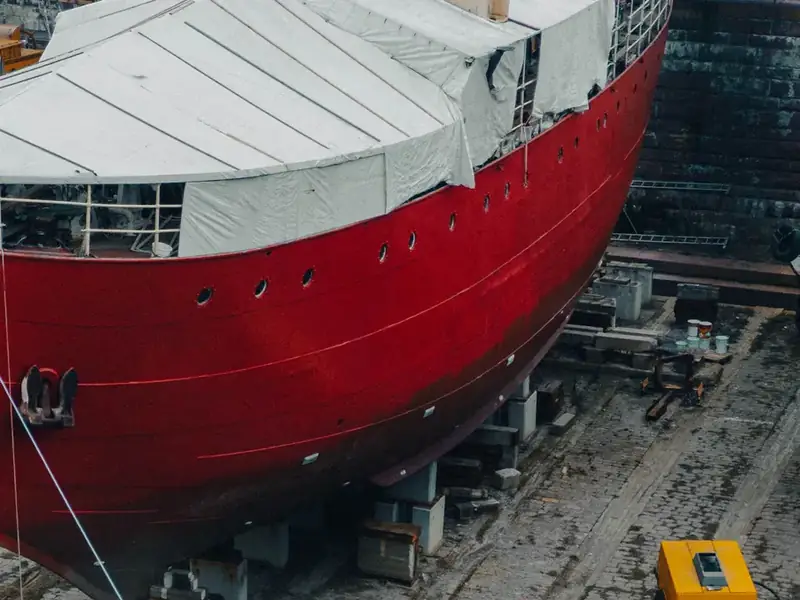
What Is Monel Scrap, and Why Is It Sorted Apart from Other Nickel Alloys?
Monel stands apart from every other family on this site because its second metal is copper, not chromium. That one difference shapes everything about how the scrap is handled. Monel has no use in a melt for Inconel or Hastelloy, where copper is an unwanted element, and it is too rich in nickel to be treated as a copper alloy. So it moves in its own channel, to melters who make nickel-copper alloys and to users who value both metals.
The alloy dates from the early 1900s, when it was developed at the International Nickel Company and named after the company's president, Ambrose Monell. Over a century later the base grade is Monel 400, with about 66% nickel, 31.5% copper and small amounts of iron and manganese. Monel K-500 keeps that base and adds about 2.7% aluminium and 0.6% titanium, which allow it to be age-hardened for shafts, springs and oil-well tools. Many sellers call K-500 "Monel 500".
Separating the two is where most Monel lots go wrong. Nickel and copper read almost the same on a basic XRF, and the aluminium that marks K-500 needs a light-element method. The second common problem is cupronickel. 70/30 and 90/10 copper-nickel condenser tube, sheet and fittings come out of the same ships and power plants, look similar once tarnished, and are copper-base. They belong with copper scrap, and a few pieces in a Monel lot pull its nickel content down.
Monel is a registered trademark of the Special Metals group; on this page the name describes scrap of the alloys.
Monel Scrap Grades We Buy and Sell
Monel Chemical Composition
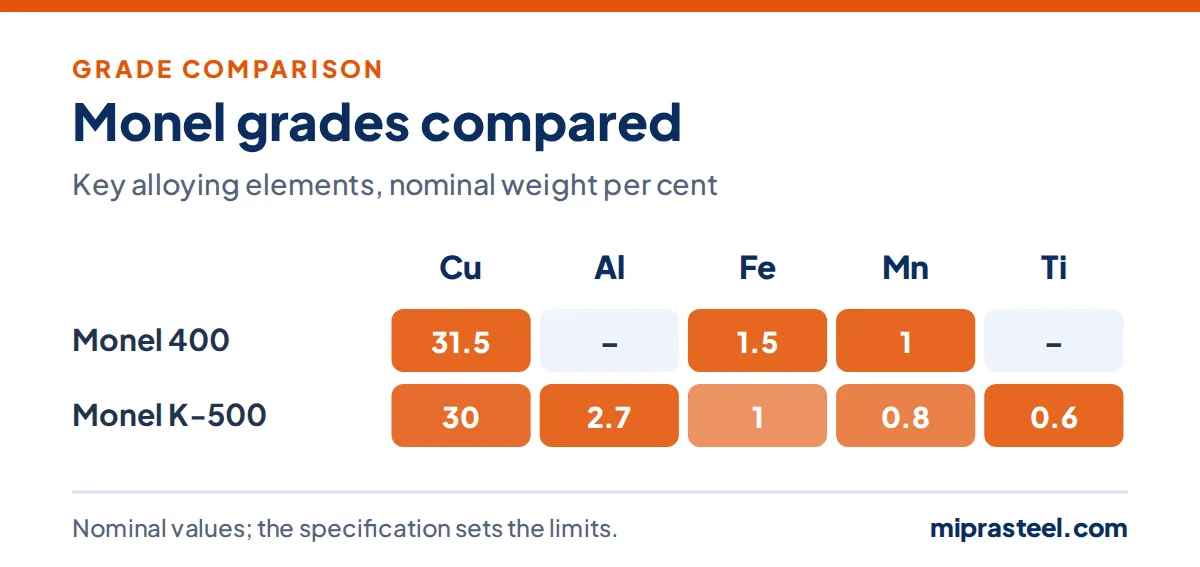
| Grade | Ni | Cu | Al | Fe | Mn | Ti |
|---|---|---|---|---|---|---|
| Monel 400 | 66 | 31.5 | – | 1.5 | 1 | – |
| Monel K-500 | 64.9 | 30 | 2.7 | 1 | 0.8 | 0.6 |
Nominal weight per cent. Specification ranges vary by product form and standard.
How to Tell Monel Grades Apart
Monel is easy to recognise as a family and harder to split by grade. A buyer checking a Monel lot works through these points.
| Check | What it shows for Monel |
|---|---|
| Copper | About 30% to 32% copper with no chromium marks the family. Any chromium reading means the piece is something else. |
| Nickel against copper | Nickel well above copper (about 65% to 66%) confirms Monel. Copper above nickel means cupronickel, which is copper scrap. |
| Aluminium and titanium | About 2.7% aluminium with 0.6% titanium means K-500. Confirm with a light-element XRF or OES; basic XRF often misses aluminium. |
| Magnet response | Monel 400 can pull weakly on a magnet near room temperature; K-500 does not. Treat this as a hint only. |
| Part type | Shafts, springs, collars and aged bar suggest K-500. Valves, pump casings, fittings and plate suggest 400. |
| Markings and certificates | Heat numbers or certificates quoting N04400 or N05500, or QQ-N-281 and QQ-N-286, settle the grade. |
Grades Most Often Confused with Monel
- Ni-Resist Type 1: a cast iron used for seawater pumps too, with copper (about 6.5%) but only 15.5% nickel and about 70% iron.
- Incoloy 825: carries some copper (about 2.25%) but also 30% iron and 21.5% chromium.
- Inconel 600: close in nickel (76%) and can look similar once oxidised, but has 15.5% chromium and no copper.
Aluminium and Titanium Separate K-500 from 400
On a basic XRF the two read almost the same. Aluminium needs a light-element setup or OES. See Monel 400 vs K-500.
The Magnet Is Misleading
Monel 400 can be weakly magnetic at room temperature; K-500 is non-magnetic. Neither behaviour is a reliable sorting test.
Watch for Cupronickel
70/30 and 90/10 cupronickel are copper-base, not nickel-base. They are traded as copper alloy scrap.
Where Monel Scrap Comes From
Most Monel goes into salt water or hydrofluoric acid service, so scrap follows ships, refineries and seawater systems.
Ship Recycling and Marine Repair
Seawater valves, pump casings and impellers, fasteners and fittings in Monel 400, and propeller and pump shafts in K-500. See marine scrap.
Refinery HF Alkylation Units
Turnarounds release Monel 400 piping components, valves and vessel linings from hydrofluoric acid service. Parts must be decontaminated by the plant before release. See oil and gas scrap.
Desalination and Seawater Cooling
Pumps, valves and heat exchanger parts in Monel 400 come out during plant upgrades. See desalination scrap.
Oilfield Tools
Drill collars, oil-well tools and pump shafts in K-500, often as bar ends and machining turnings.
Industrial Machining and Wear Parts
Doctor blades, scrapers, springs and fasteners in K-500, and machined fittings in 400.
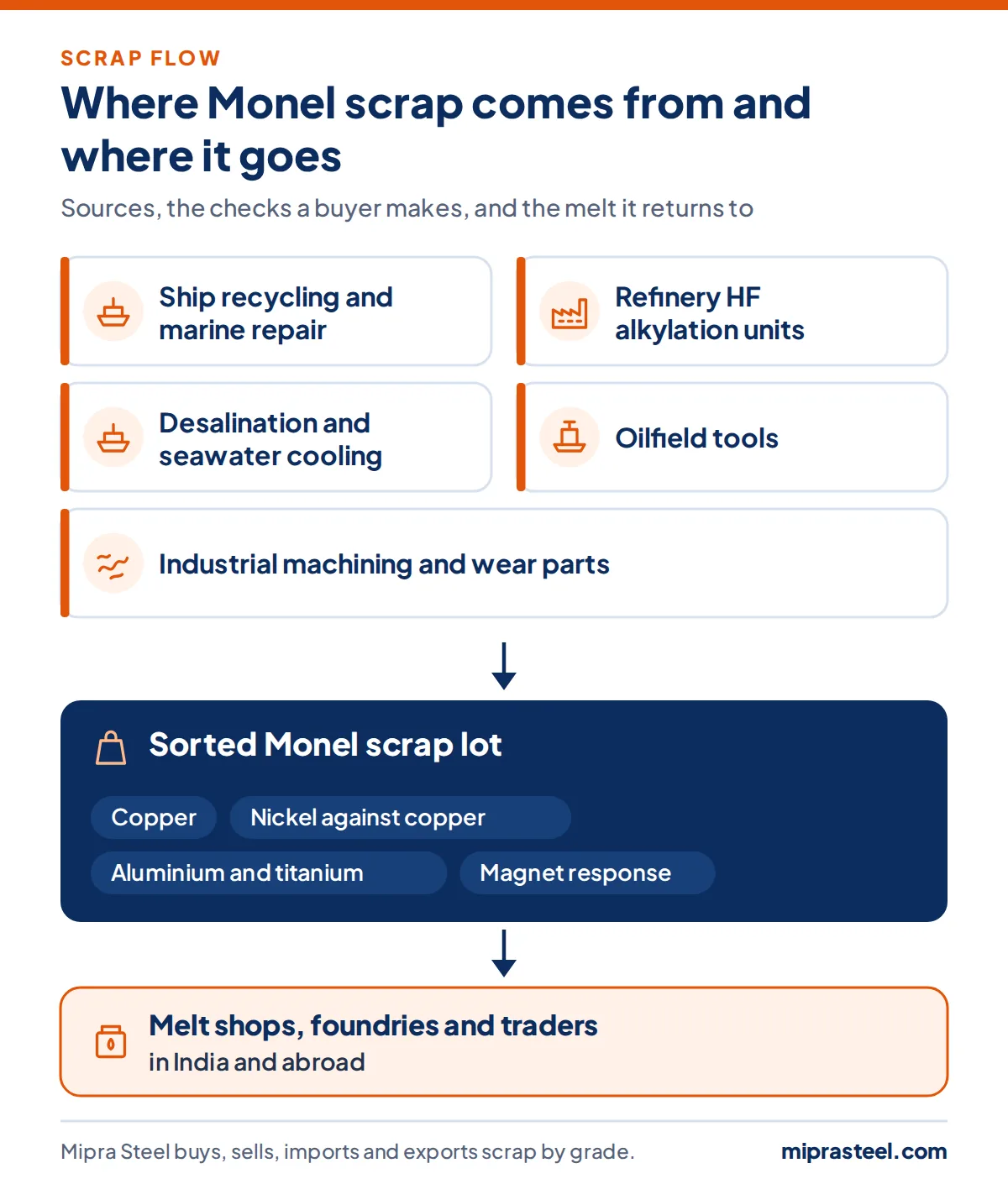
Source industries: marine and shipbuilding, oil and gas, chemical processing.
Comparisons
Monel Scrap Buyer, Importer and Exporter in India
Mipra Steel trades Monel 400 and K-500 scrap from Khetwadi, Mumbai, buying from ship recyclers, refineries and machine shops and supplying described lots at home and abroad.
Sell Monel Scrap
To sell Monel scrap, tell us whether it is 400, K-500 or not yet known, the approximate weight, the form (valves, pump parts, shafts, bar ends, turnings) and where it is. Photographs help, and so do readings that show nickel, copper and, if available, aluminium. Flag any cupronickel or bronze in the pile so it can be handled separately. We review incoming enquiries and respond with relevant next steps.
Buy Monel Scrap
Melters and traders looking for Monel scrap should say whether they need 400, K-500 or either, the quantity, the forms they can use and the delivery port. Lots are described with UNS numbers and readings, and the paperwork can be agreed before shipment.
Preparing Monel Scrap for Sale
- Pick out every cupronickel, bronze and brass piece before weighing a Monel lot.
- Separate K-500 shafts and bar from Monel 400 castings and fittings.
- Remove rubber, PTFE and paint, and scrape off marine growth.
- Ask the refinery for decontamination records for any HF-unit material.
- Keep turnings dry and away from copper-alloy swarf.
Monel Scrap Price per Kg: What Decides It
A Monel scrap price per kg is built from two metal prices, not one. Nickel and copper are both payable, nickel carries the larger share of value, and the lot condition adjusts the result.
- Nickel content of about 65% to 66%, priced against the nickel market.
- Copper content of about 30% to 32%, which adds value in a nickel-copper melt.
- Freedom from cupronickel, bronze and brass fittings that ride along from the same ships and plants.
- Grade separation where a buyer wants K-500 for its aluminium and titanium, or wants 400 without them.
- Cleanliness: marine growth, paint, rubber linings and HF-service residue all cost money to remove.
- Form, lot size and location: solids and bar ends ahead of turnings; full containers ahead of small loads.
With nickel and copper both moving daily, offers on Monel are dated and fixed for a short period. The full method is in how nickel alloy scrap is valued.
Monel Scrap Import and Export
Importing Monel Scrap into India
Monel scrap arrives in India from the Gulf, where refineries and desalination plants use it, and from East Asian and European ship repair and recycling. Pre-shipment inspection is carried out before loading, and its certificate accompanies the commercial invoice, packing list and bill of lading. Describing the material as nickel-copper alloy, Monel 400 or K-500, with its UNS number, avoids confusion with copper scrap at customs. West-coast ports such as Nhava Sheva and Mundra take most of these containers. See the nickel alloy scrap import guide.
Exporting Monel Scrap from India
Indian ship recycling, refinery maintenance and marine fabrication release Monel 400 fittings, valves and pump parts, and oilfield shops add K-500 bar ends. Export lots are weighed and described by grade and UNS number on the invoice and packing list, then shipped bagged, in drums or loose in containers. Our offices in Dubai and South Korea sit close to buyers in the UAE and South Korea, and lots also travel to Japan. See how to sell Monel scrap.
Customs heading: 7503.00 (nickel waste and scrap). The HS code is the international tariff heading the scrap is declared under; national tariff lines add further digits, so confirm the full line with your customs broker.
Related Reading
Monel Scrap FAQ
Is Monel scrap nickel scrap or copper scrap?
Nickel scrap. Monel holds about 65% to 66% nickel and 30% to 32% copper, so nickel predominates and it is traded as nickel alloy scrap. Cupronickel, where copper is the larger part, is a copper alloy and is traded separately.
How can I tell Monel K-500 scrap from Monel 400?
Read aluminium and titanium. K-500 carries about 2.7% aluminium and 0.6% titanium; Monel 400 has essentially none. Basic XRF often cannot see aluminium, so use a light-element setup or OES. Part type helps: shafts and springs are usually K-500. See Monel 400 vs K-500.
Why does a magnet sometimes stick to Monel?
Monel 400 has its Curie point close to room temperature, so it can be weakly magnetic on a cool day and not on a warm one. K-500 is non-magnetic. Because of this, a magnet is not a reliable way to sort Monel from other alloys.
Does copper in Monel add to the scrap value?
Yes. Monel offers are built on both nickel and copper, with nickel the larger share. Copper only counts when the lot goes to a melter who can use it, which is why Monel is never mixed with chromium-bearing nickel alloys.
What tariff heading is used when shipping Monel scrap?
Monel is nickel-predominant, so its scrap is typically entered under HS 7503.00, nickel waste and scrap, not under the copper scrap heading. Confirm the full national line with your customs broker before shipment.
Where is Monel scrap found in India?
Mostly at ship recycling and repair yards, refineries with hydrofluoric acid alkylation units, desalination and seawater cooling plants, and machine shops making oilfield and marine parts.
How do I offer Monel scrap to Mipra Steel?
Send the grade if known, weight, form, location and photographs, plus readings if you have them. Mention any cupronickel in the lot. Mipra Steel buys and exports Monel from Mumbai and has offices in Dubai and South Korea.
Published by Mipra Steel, Khetwadi, Mumbai · Updated