What Counts as Pure Molybdenum Scrap, and What Does Not?
Molybdenum does two quite different jobs in industry, and only one of them produces the scrap on this page. Most of the world's molybdenum disappears into steel and nickel alloys as an alloying element, and once it is there it is recycled as part of that steel or alloy. A smaller share is made into molybdenum metal itself: pressed and sintered powder rolled into sheet, drawn into wire or forged into rod. Those mill products become hot-zone shields, heating elements, sintering boats, glass melting electrodes and sputtering targets, and when they are worn out, cut off or rejected they become pure molybdenum scrap.
That distinction decides who buys it. Steelmakers normally add molybdenum as technical oxide or ferro molybdenum, so clean metal scrap is wasted on them. Superalloy melters, on the other hand, add molybdenum as pure metal to keep trace elements out of the heat, and offcuts from mill product makers are used for alloy additions in the same way. A lot that can show 99.9% molybdenum, without titanium, zirconium, lanthanum or tungsten, is the one those buyers want.
Inside the moly family, three materials are worth keeping apart. Plain molybdenum is the base case. TZM carries about 0.5% titanium, 0.08% zirconium and a trace of carbon, which lifts its strength at temperature. Molybdenum-lanthanum carries a small lanthanum oxide addition. All three look identical on the bench, so a piece without markings or paperwork is only described once an XRF or laboratory reading has been taken. Solids, wire, turnings and powder are then bagged separately, because each goes a different way at the consumer.
Typical Composition
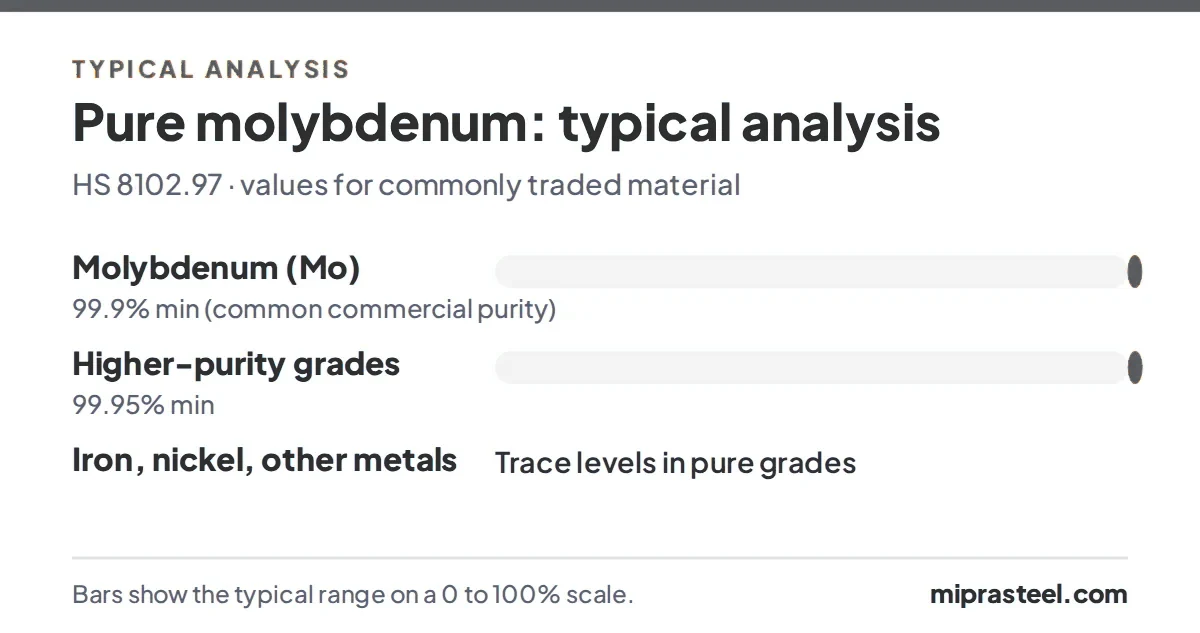
| Element or property | Typical value |
|---|---|
| Molybdenum (Mo) | 99.9% min (common commercial purity) |
| Higher-purity grades | 99.95% min |
| Iron, nickel, other metals | Trace levels in pure grades |
Typical values for commonly traded material. The certificate or analysis of each lot governs.
Forms Pure Molybdenum Scrap Comes In
- Sheet and plate offcuts
- Rod and bar ends
- Wire
- Turnings and chips
- Furnace shields, elements and fixtures
- Powder
Where Pure Molybdenum Is Used
- Vacuum and hydrogen furnace hot zones
- Glass melting electrodes
- Sintering boats and furnace fixtures
- Electronics and lighting parts
- Sputtering and coating targets
What Buyers Check in a Lot
Purity
Pure molybdenum is described by its molybdenum content, usually confirmed by XRF.
Alloy Separation
TZM, molybdenum-lanthanum and other alloys should be kept apart from pure molybdenum.
Surface Condition
Oxide, coatings, deposits and attached steel or ceramic reduce the usable metal and are stated in the description.
Form and Size
Solids, turnings, wire and powder are handled differently and are described separately.
Oil and Moisture
Turnings may carry cutting oil, which is noted in the lot description.
How to Recognise Pure Molybdenum
Weight in the hand and a magnet give the first answer. XRF gives the one that goes on the invoice.
| Check | What it shows for Pure molybdenum |
|---|---|
| Heft | At about 10.2 g/cm³, molybdenum is about a third heavier than steel and only about half as heavy as tungsten of the same size. |
| Magnet | Pure molybdenum is not magnetic. A strong pull points to steel fixtures, fasteners or a different metal mixed in. |
| Titanium and zirconium | Readings near 0.5% titanium and 0.08% zirconium mean TZM, which is described and bagged as its own lot. |
| Lanthanum | A small lanthanum signal points to molybdenum-lanthanum. It looks exactly like plain moly and is common in furnace parts. |
| Tungsten | Any tungsten in a moly reading means mixed material or a molybdenum-tungsten alloy. Separate it before the lot is described. |
| Surface and attachments | Furnace parts may carry oxide, deposits or ceramic, and targets may still be bonded to a backing plate or tube. Each is stated, because it is not molybdenum. |
Grades Most Often Confused with Pure Molybdenum
- Pure tungsten: looks the same grey but weighs about 19.3 g/cm³, so an equal-sized piece is close to twice as heavy as molybdenum.
- Hastelloy B-2: carries about 28% molybdenum, but in a nickel base, so XRF shows nickel as the main element and the lot is valued as nickel alloy.
Density Separates It from Tungsten
Molybdenum has a density of about 10.2 g/cm³, roughly half that of tungsten at about 19.3 g/cm³, so similar pieces feel very different in weight.
Not Magnetic
Pure molybdenum is not attracted to a magnet, which separates it from steel parts and fixtures it may be attached to.
Alloys Look the Same
TZM and other molybdenum alloys look like pure molybdenum, so XRF is needed to confirm the small alloy additions.
Where Pure Molybdenum Scrap Comes From
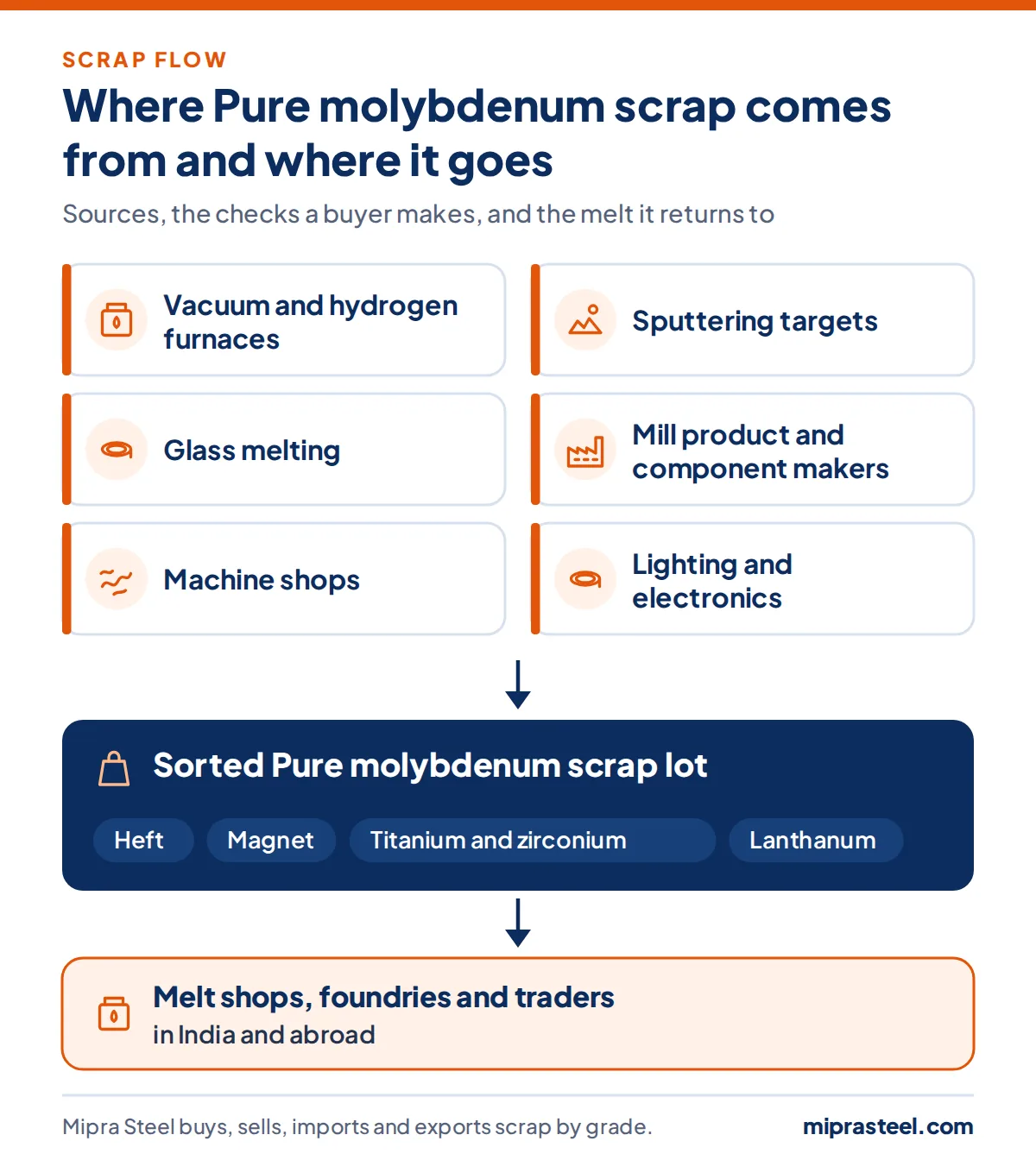
Pure moly scrap comes from a short list of places, and each tends to give a recognisable form of material.
Vacuum and Hydrogen Furnaces
Heat-treatment and brazing furnaces with all-metal hot zones are relined from time to time. The old radiation shields, heating elements, hearth rails and fixtures come out as sheet packs and bent strip, often discoloured or brittle. See heat treatment and furnace scrap.
Sputtering Targets
Planar and tubular molybdenum targets lay down thin films for flat panel display electronics and thin-film solar cells. Targets are made to high purity, above 99.97% for some grades, and a spent target still holds most of its metal once the eroded track is used up.
Glass Melting
Molybdenum electrodes heat glass melts electrically. Electrode stubs and end pieces are removed when a furnace is rebuilt.
Mill Product and Component Makers
Rolling, cutting and stamping of sheet, plate and rod leave trim, blanks and bar ends of known purity. This is usually the cleanest moly scrap on the market.
Machine Shops
Turning and milling of molybdenum fixtures and parts produce chips and turnings, which carry coolant and need their own description. Read solids vs turnings.
Lighting and Electronics
Wire, supports and lead-in parts from lamp and electronic component production give small, light rejects that are kept dry and bagged.
Pure Molybdenum (Moly) Scrap Buyer, Importer and Exporter in India
Mipra Steel trades pure molybdenum scrap from Khetwadi, Mumbai, buying from furnace users, fabricators and traders and supplying described lots to alloy makers and traders in India and abroad.
Sell Pure Molybdenum Scrap
Have old furnace shields, molybdenum sheet trim, rod ends, spent targets or moly turnings? Tell us the form, approximate weight and location, and send clear photographs. Mention whether any of it is TZM or molybdenum-lanthanum, and attach certificates or XRF readings if you have them. For furnace parts, a note on the furnace type and any coating helps. We review incoming enquiries and respond with relevant next steps.
Buy Pure Molybdenum Scrap
Sourcing molybdenum metal scrap as an alloy addition or for reprocessing? Give us the purity you need, the forms you can use (plate trim, rod, targets, turnings), the quantity, destination port and timing. Lots are described by molybdenum content and form, and we can discuss which certificates or readings travel with each one.
Preparing Pure Molybdenum Scrap for Sale
- Read every unmarked piece for titanium, zirconium, lanthanum and tungsten before it joins a lot.
- Bag TZM and molybdenum-lanthanum separately from plain molybdenum.
- Strip steel bolts, brackets, ceramic insulators and thermocouple sheaths from furnace parts.
- Keep spent targets whole and state whether a backing plate or tube is still attached.
- Drain moly turnings and pack them dry in closed drums.
- Photograph labels, heat numbers and certificates alongside the material.
Pure Molybdenum Scrap Price per Kg: What Decides It
A buyer working out a molybdenum scrap price per kg starts with how much of the lot is clean molybdenum and how certain that figure is.
- Purity and paperwork: offcuts with a producer certificate showing 99.9% or 99.95% molybdenum need less checking than unmarked furnace parts.
- Alloy separation: TZM and molybdenum-lanthanum have their own users, and a lot that mixes them with plain moly has to be valued for the mixture.
- Form: plate trim, rod ends and spent targets are handled more easily than thin foil, wire or turnings, which carry more surface and more risk of contamination.
- Surface condition: heavy oxide, glass, ceramic and deposits reduce the usable metal and are deducted.
- Attached material: bonded backing plates, steel fasteners and welded brackets have to be removed or declared.
- Lot size and location: a sorted, drummed lot at a port is cheaper to move than mixed parts spread across several sites.
Molybdenum prices move with the oxide and ferro molybdenum markets, so every offer carries a date. The ferro alloy and metal scrap value guide explains the method.
Pure Molybdenum Scrap Import and Export
Importing Pure Molybdenum Scrap into India
Pure molybdenum scrap reaches India from East Asia, where display and solar production use molybdenum targets, and from Europe and the Gulf, where furnace hot zones are rebuilt. Imported metal scrap is normally inspected before shipment and arrives with a pre-shipment inspection certificate, commercial invoice, packing list and bill of lading. The invoice should name the material plainly, for example "molybdenum scrap, 99.9% Mo, sheet trim", so the customs description and the commercial one agree. Most containers clear through Nhava Sheva (JNPT) or Mundra. Read importing alloy scrap into India for the document set.
Exporting Pure Molybdenum Scrap from India
Indian heat-treatment shops, glass plants and fabricators release furnace parts, electrode pieces and offcuts that alloy makers abroad can use. Export lots are described by molybdenum content and form on the invoice and packing list, weighed, and shipped in drums or bags inside containers from Nhava Sheva or Mundra. Our offices in South Korea and the UAE keep us close to buyers in East Asia and the Gulf, and we also serve Japan. See export documents for alloy scrap.
Customs heading: 8102.97. The HS code is the international tariff heading the scrap is declared under; national tariff lines add further digits, so confirm the full line with your customs broker.
Related Reading
Pure Molybdenum (Moly) Scrap FAQ
Which HS code covers molybdenum waste and scrap?
Molybdenum waste and scrap is typically declared under HS 8102.97. Your country adds further digits to make the national tariff line, so check the full code with your customs broker before the shipping documents are drawn up.
Is TZM scrap worth the same as pure molybdenum scrap?
Not always. TZM contains about 0.5% titanium and 0.08% zirconium, which a superalloy melter may not want, while a TZM user may value it. Because the two cannot be told apart by eye, mixed lots are usually priced below a clean single-material lot.
Can old vacuum furnace shields be sold as molybdenum scrap?
Yes. Shields, elements and hearth parts from all-metal hot zones are a common source. They are often oxidised or brittle and may carry deposits, so they are described separately from clean offcuts, and attached steel or ceramic is removed or declared.
Do spent molybdenum sputtering targets have scrap value?
They do. Targets are made to high purity and still contain most of their metal after use. State the target type (planar or tubular), the approximate remaining weight and whether it is still bonded to a backing plate or tube.
Why do steel plants rarely buy pure moly scrap?
Steelmakers usually add molybdenum as technical oxide or ferro molybdenum, which cost less per unit of molybdenum. Pure metal scrap fits better with superalloy and special alloy melters, who need molybdenum without trace contamination.
How heavy should a molybdenum piece feel?
About 10.2 g/cm³, so about a third heavier than a steel piece of the same size. If it feels nearly twice that, it is probably tungsten, and an XRF reading will confirm it.
Can Mipra Steel take my molybdenum turnings or furnace parts?
Yes, Mipra Steel buys and sells moly in solid, turning and furnace-part form. Send the form, weight, location and photographs, plus any certificates or readings, and say whether TZM or molybdenum-lanthanum is present.
Published by Mipra Steel, Khetwadi, Mumbai · Updated