How Is Titanium Scrap Graded, and Why Do the Grades Matter to a Remelter?
Titanium weighs a little over half as much as steel for the same volume, around 4.4 to 4.5 g/cm³, and its value as scrap depends on two things: which recipe it can go back into, and how clean it is. The five grades on this site fall into three groups. Grade 1 and Grade 2 are commercially pure, differing mainly in oxygen and iron, with Grade 2 the common choice for tubes and plate. Grade 7 and Grade 11 are the same two bases with about 0.15% palladium added for reducing acids. Grade 5 is the alpha-beta alloy Ti-6Al-4V.
A remelter producing Ti-6Al-4V ingot can feed clean Grade 5 back in with its aluminium and vanadium already counted. The same remelter cannot use a bag where CP plate and Grade 5 chips are mixed without diluting the alloy. Palladium grades are kept apart for a different reason: the palladium is worth recovering into Grade 7 or 11 melts, and wasted if it disappears into a CP heat.
Cleanliness decides the rest. Titanium picks up oxygen and nitrogen when it is overheated, and blue or grey burnt turnings carry more of both than bright ones. Iron from saw blades or mixed steel, and above all fragments of tungsten-carbide tooling, can make a lot unusable for premium remelting. Material that misses remelt quality still has buyers, notably ferro titanium producers and steelmakers who use titanium as an addition, but at a lower offer.
Titanium is a separate metal family, never a nickel alloy, and should not share bags with nickel or cobalt scrap. See titanium vs nickel alloy and our guide to selling titanium scrap.
Titanium Scrap Grades We Buy and Sell
Titanium Chemical Composition
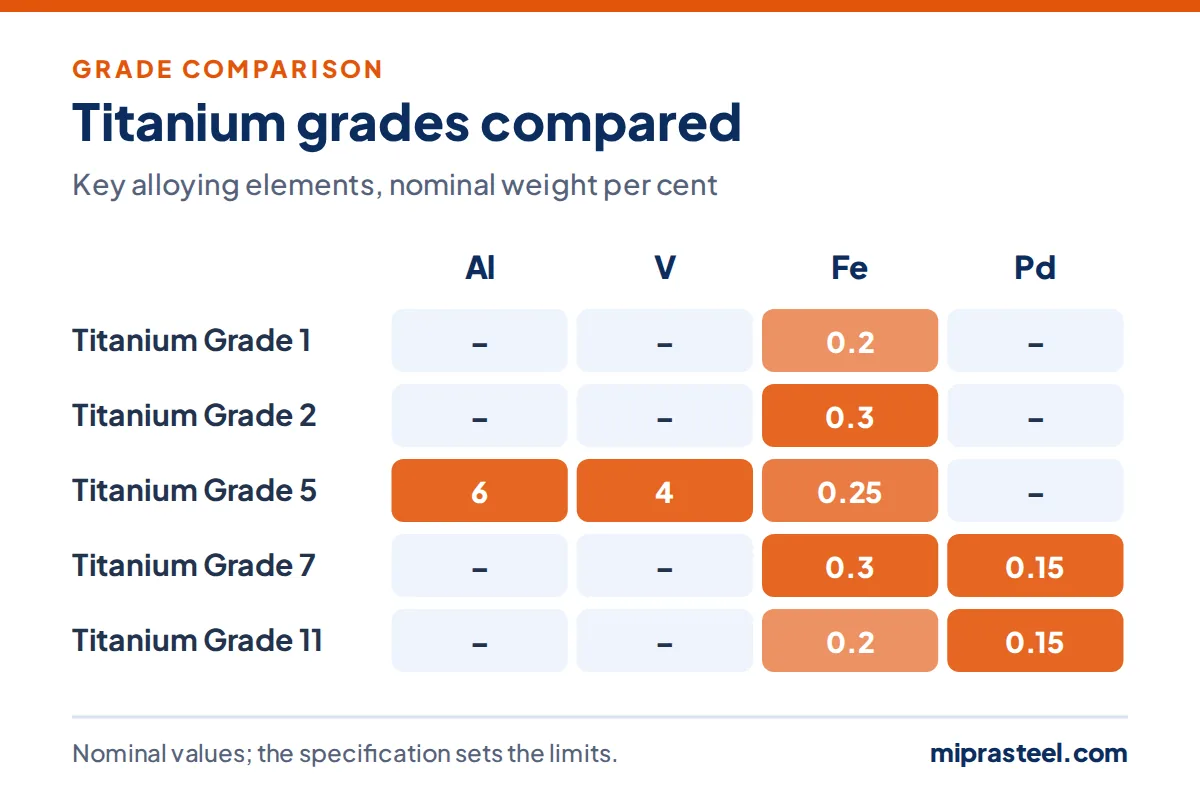
| Grade | Ti | Al | V |
|---|---|---|---|
| Titanium Grade 1 | 99.8 | – | – |
| Titanium Grade 2 | 99.7 | – | – |
| Titanium Grade 5 | 89.8 | 6 | 4 |
| Titanium Grade 7 | 99.6 | – | – |
| Titanium Grade 11 | 99.7 | – | – |
Nominal weight per cent. Specification ranges vary by product form and standard.
How to Tell Titanium Grades Apart
Weight in the hand and a spark give the first clue; an analysis and the paperwork settle the grade.
| Check | What it shows for Titanium |
|---|---|
| Density and feel | Titanium is light for a metal of its strength, at about 4.5 g/cm³ against nearly 8 for stainless, which shows quickly when a bar is lifted. |
| Spark test | A grinder throws brilliant white sparks from titanium, quite unlike the orange of steel or the dull short sparks of nickel alloys. |
| Vanadium by XRF | About 4% vanadium identifies Grade 5; reading the 6% aluminium needs a light-element setting. |
| Palladium by XRF | About 0.15% palladium separates Grades 7 and 11 from plain CP titanium. |
| Grade 1 vs Grade 2 and 7 vs 11 | These pairs differ in oxygen and iron, which XRF does not resolve reliably, so mill certificates, tube markings or hardness are used. |
| Carbide and iron screening | Turnings are checked for tool fragments and steel by magnet, visual inspection and, at remelters, X-ray or density separation. |
| Colour of turnings | Bright silver chips are lightly oxidised; straw, blue or grey chips have run hot and carry more oxygen. |
Grades Most Often Confused with Titanium
- Aluminium alloys: also light and non-magnetic, but at about 2.7 g/cm³ they are much lighter and do not throw white sparks.
- Tungsten carbide: the contaminant to find: tool fragments are very heavy, around 14 to 15 g/cm³, and must be removed from titanium turnings.
- Stainless steel: similar colour but nearly twice the weight for the same size, and some grades pull a magnet.
Vanadium Identifies Grade 5
About 4% vanadium reads clearly on XRF; the 6% aluminium needs a light-element setup.
Palladium Identifies Grades 7 and 11
About 0.15% palladium, visible on XRF near 21 keV.
Grade 1 vs 2 Needs Paperwork
They differ mainly in oxygen and iron, which XRF can’t resolve reliably. Mill certificates or hardness testing are used.
Keep Turnings Dry and Separate
Titanium turnings are a fire risk, and carbide tool fragments cause rejection at remelt.
Where Titanium Scrap Comes From
Grade 5 and the CP grades come from very different industries, so the source of a lot is a strong hint to its grade.
Aerospace Machine Shops
Fan and compressor parts, brackets and fasteners are cut from Grade 5 bar, plate and forgings, so turnings, bar ends and plate skeletons are mostly Ti-6Al-4V. See aerospace.
Power Plant Condensers
Coastal power stations and refineries use Grade 2 condenser and exchanger tubes; retubing releases tube bundles and tube sheet cladding.
Desalination and Seawater Cooling
Plate heat exchangers and intake equipment use CP titanium, and plate packs come out as Grade 1 or Grade 2 when units are rebuilt. See desalination.
Chlor-Alkali and Chemical Plant
Anodes, vessel linings and acid-service exchangers supply CP titanium and the palladium Grades 7 and 11.
Fabrication and Forming
Sheet trim, punchings and weld-test pieces from vessel, cladding and medical-component makers.
Oil and Gas
Grade 5 risers, drilling components and fasteners from offshore work.
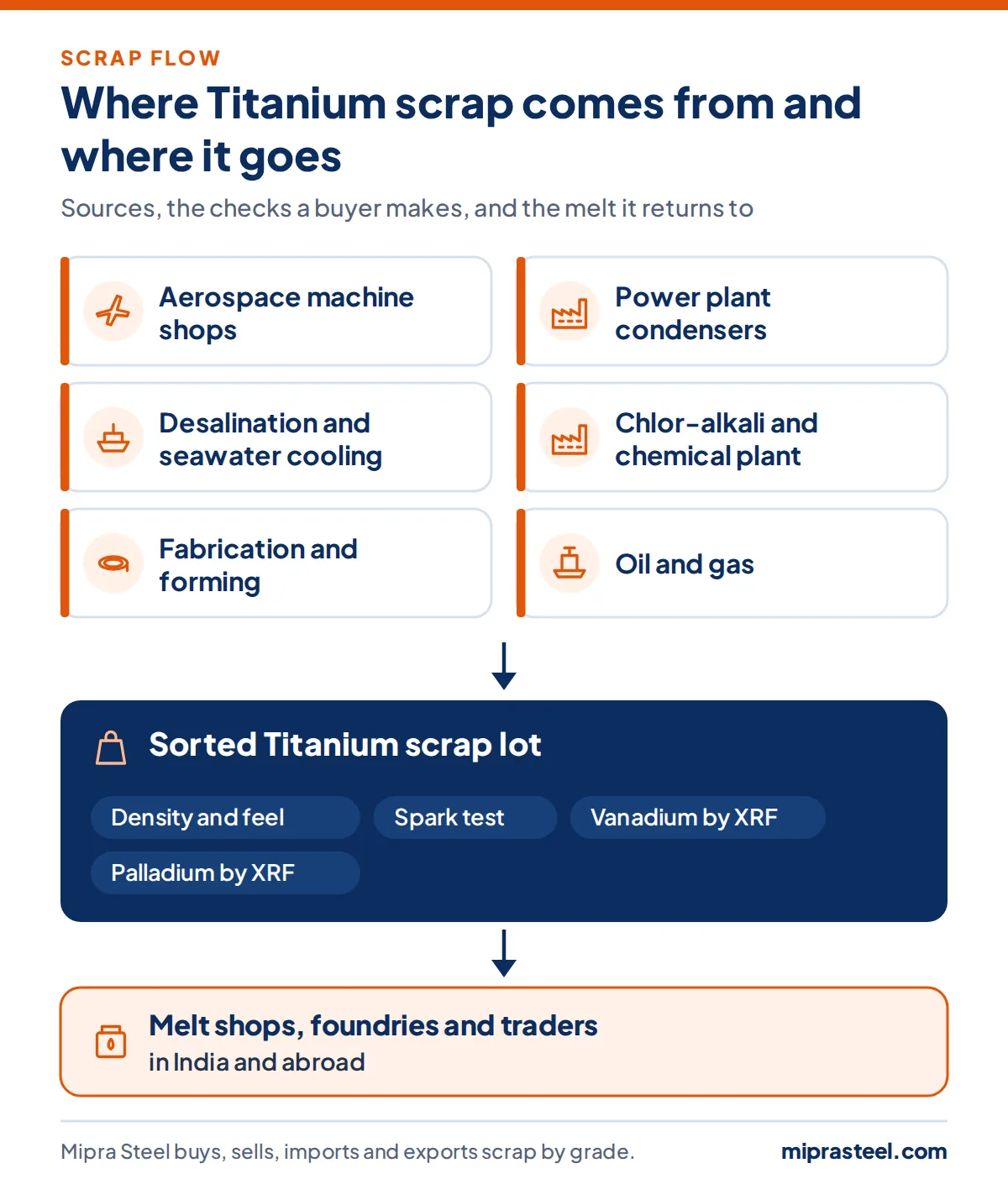
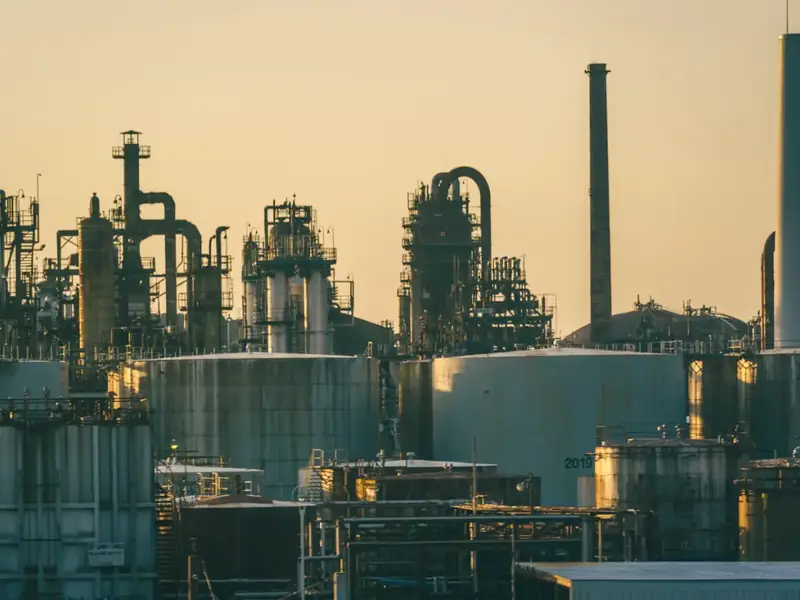
Source industries: chemical processing, desalination, power generation, marine and shipbuilding, aerospace, oil and gas.
Comparisons
Titanium Scrap Buyer, Importer and Exporter in India
Mipra Steel trades titanium scrap from Khetwadi, Mumbai, buying graded solids and turnings and supplying remelters, ferro titanium producers and steelmakers in India and abroad.
Sell Titanium Scrap
Selling titanium scrap? Tell us the grade or grades, how you know them (certificates, tube markings, XRF readings for vanadium or palladium), the form and weight of each, the location and photographs. For turnings, say whether they are dry, crushed or loose, what tooling was used and whether carbide inserts were in use on that machine. We review incoming enquiries and respond with relevant next steps.
Buy Titanium Scrap
Remelters, ferro titanium producers and steelmakers looking for titanium scrap should give the grade, form, the oxygen and iron limits they work to, whether carbide-screened material is required, and the quantity and delivery point. CP plate, Grade 5 solids and Grade 5 turnings are distinct lots, and each is described with the evidence that supports its grade.
Preparing Titanium Scrap for Sale
- Bag Grade 5, CP and palladium grades separately from the machine onward.
- Keep turnings dry, away from ignition sources and out of the rain.
- Remove carbide inserts, broken tool tips and steel parts before bagging.
- Separate bright turnings from discoloured, overheated chips.
- Keep mill certificates and tube or plate markings with the lot.
- Never store titanium alongside nickel, cobalt or stainless scrap.
Titanium Scrap Price per Kg: What Decides It
A titanium scrap price per kg is set by the grade group, then by how close the lot is to remelt quality.
- Grade group: Grade 5 carries its alloying, Grades 7 and 11 carry palladium, and CP grades are the base case.
- Form: heavy solids and clean plate are worth more than turnings, which need crushing, cleaning and drying.
- Oxygen and nitrogen pickup: discoloured or burnt turnings are discounted or redirected to lower uses.
- Tungsten-carbide contamination: one confirmed carbide fragment can rule a lot out of aerospace remelting.
- Iron and steel inclusion: saw chips, swarf from shared machines and steel fasteners lower the grade.
- Oil, coolant and moisture: wet, oily turnings weigh more than their metal and are a fire and handling problem.
- Traceability: certificates and part records support acceptance for premium remelting.
Titanium scrap prices follow ingot and sponge markets and aerospace demand, so any offer is dated to its day. See the contained metal calculator for the arithmetic behind a lot.
Titanium Scrap Import and Export
Importing Titanium Scrap into India
India uses titanium in aerospace, defence, power and chemical plant, and imported scrap supplements domestic arisings for remelters and ferro titanium producers. Titanium waste and scrap is typically declared under HS 8108.30; confirm the national line with your customs broker. Lots from the Gulf, Europe, Japan and Korea arrive with a pre-shipment inspection certificate, commercial invoice, packing list and bill of lading, usually through Nhava Sheva, Mundra or Chennai. Describing each grade separately on the invoice, rather than "titanium scrap" alone, keeps the customs entry and the buyer's acceptance aligned. See importing alloy scrap into India.
Exporting Titanium Scrap from India
Indian aerospace machining, condenser retubing and chemical plant rebuilds produce titanium scrap that remelters in East Asia, Europe and the Gulf take up. Export lots are described by grade and UNS number on the invoice and packing list, weighed, and packed in drums or bags with turnings kept dry. Our South Korea office works with buyers there and in Japan, and our Dubai office covers Saudi Arabia and the wider Gulf.
Customs heading: 8108.30 (titanium waste and scrap). The HS code is the international tariff heading the scrap is declared under; national tariff lines add further digits, so confirm the full line with your customs broker.
Related Reading
Titanium Scrap FAQ
How do I tell titanium Grade 5 from Grade 2 scrap?
Read it for vanadium. Grade 5 (Ti-6Al-4V) carries about 4% vanadium and 6% aluminium, while Grade 2 is commercially pure and shows almost nothing but titanium and a little iron. Grade 5 is also noticeably harder. See Grade 2 vs Grade 5.
Why are titanium turnings priced lower than solids?
Turnings need crushing, degreasing, drying and screening for carbide and iron before they can be remelted, and they carry oil, moisture and oxidised chips. Solids can often go to the furnace with little more than cleaning, so they need less work and carry less risk.
Why does carbide in titanium scrap cause rejections?
Tungsten-carbide fragments do not melt in a titanium furnace. They survive as dense inclusions in the next ingot and can start cracks in rotating aerospace parts, so remelters screen for them and reject lots where they are found.
What is the HS code for titanium scrap?
Titanium waste and scrap is typically declared under HS 8108.30. Tariff lines beyond six digits differ by country, so check the national code with your customs broker before booking a shipment.
Are titanium Grades 7 and 11 kept separate from Grade 2?
Yes. They carry about 0.15% palladium, which a remelter making palladium grades will pay for and which is lost if the scrap is melted as plain CP titanium. Grade 7 is the palladium version of Grade 2 and Grade 11 of Grade 1. See Grade 2 vs Grade 7.
Is titanium turnings storage a fire risk?
Yes. Fine titanium chips and dust can ignite and burn very hot, and water on burning titanium makes it worse. Store turnings dry, in closed drums or bags, away from grinding sparks and cutting work.
Does Mipra Steel buy titanium scrap from outside India?
Yes. We buy and import lots from the Gulf, Europe and East Asia, and our offices in Dubai and South Korea help with sellers in those regions. Send the grade, form, weight, location and photographs with any certificates.
Published by Mipra Steel, Khetwadi, Mumbai · Updated