What Is Nitrided Ferro Chrome Used for, and Why Does Nitrogen Set Its Grade?
Nitrogen is a cheap and powerful alloying element in stainless steel. It raises strength, improves pitting resistance and keeps austenite stable, which allows some nickel to be saved. Duplex grades such as 2205 and 2507 depend on it, and so do the high-nitrogen austenitic and 200-series steels. Getting nitrogen into liquid steel is not straightforward, though. Gas blowing works to a point, but many shops prefer a solid addition they can weigh, and nitrided ferro chrome is that addition.
The product starts as low-carbon ferro chrome. Crushed alloy is held at high temperature in a nitrogen-rich atmosphere until it takes nitrogen into solid solution, then cooled and sized. Commercial material is usually sold in two broad bands, a few per cent nitrogen and a higher band of around six per cent or more, with chromium in the mid-sixties. The producer certificate states the figure, and buyers plan their charge from it.
That makes nitrogen the commercial specification. Two lots with the same chromium and carbon can be different products if one carries three per cent nitrogen and the other eight, and a lot of plain LC ferro chrome slipped into nitrided bags is a real problem for a melt shop that weighed its addition on the nitrogen figure. Off-grade material is usually one of three things: fines from crushing, lots that came out below the nitrogen band ordered, or surplus left when a plant stops making a nitrogen-bearing grade.
The base material has its own page at LC ferro chrome, and the full product range is on ferro alloy scrap. Steels that consume N-FeCr are covered under duplex and 254 SMO scrap.
Typical Composition
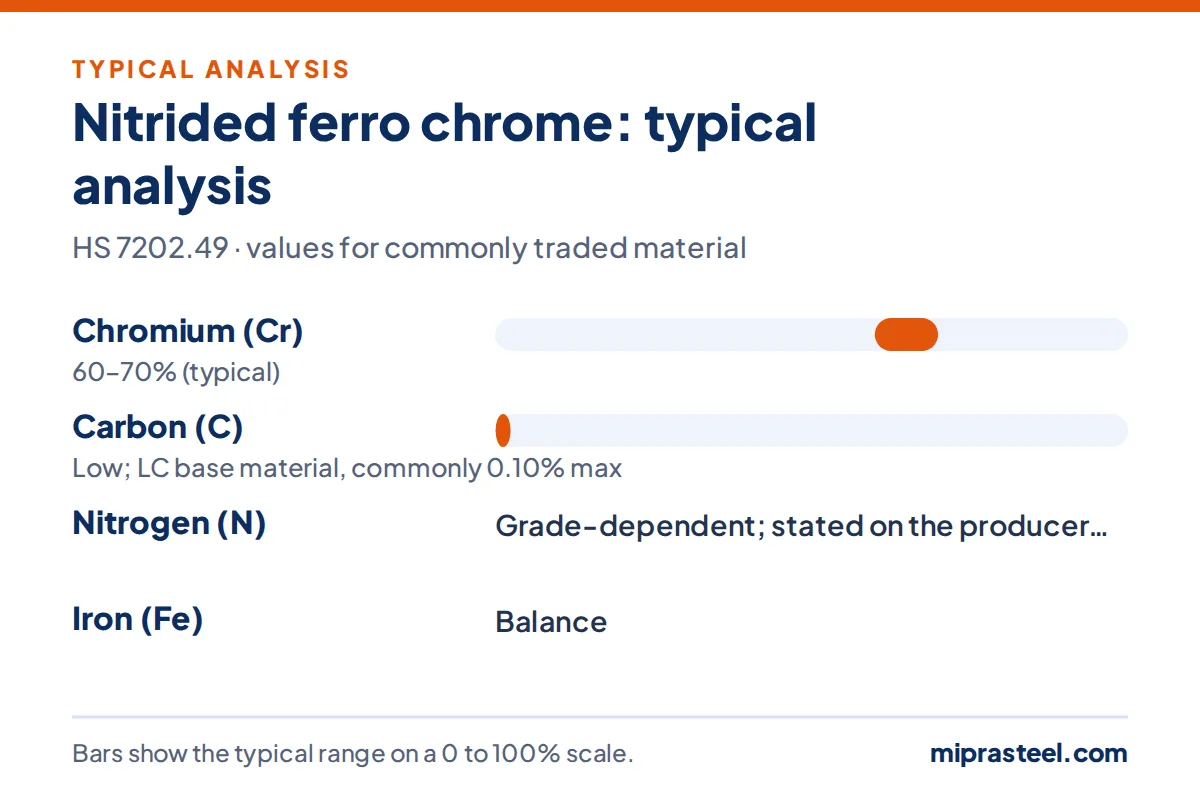
| Element or property | Typical value |
|---|---|
| Chromium (Cr) | 60–70% (typical) |
| Carbon (C) | Low; LC base material, commonly 0.10% max |
| Nitrogen (N) | Grade-dependent; stated on the producer certificate |
| Iron (Fe) | Balance |
Typical values for commonly traded material. The certificate or analysis of each lot governs.
Forms Nitrided Ferro Chrome Scrap Comes In
- Lumps
- Briquettes
- Crushed sizes
- Fines
- Off-grade lots
- Part-used bags and drums
Where Nitrided Ferro Chrome Is Used
- Nitrogen-bearing austenitic stainless steels
- Duplex stainless steels
- Heat-resistant steels
- High-nitrogen alloy steels
What Buyers Check in a Lot
Nitrogen Content
Nitrogen is the reason the material is bought, so the measured figure decides which grades it suits.
Chromium Content
Chromium is still the main paying element and is reported alongside nitrogen.
Carbon Level
The material is made from a low-carbon base, so carbon should be low and is checked by combustion analysis.
Analysis Method
Nitrogen needs inert gas fusion in a laboratory; XRF reports chromium and iron but not nitrogen or carbon.
Size and Fines
Lots are described by size range and the share of fine material.
Moisture and Contamination
Stored fines can pick up moisture or mix with other ferro alloys, which affects how the lot is described.
How to Recognise Nitrided Ferro Chrome
Nitrided and plain LC ferro chrome are both grey, brittle and crystalline. Laboratory analysis, not appearance, separates them.
| Check | What it shows for Nitrided ferro chrome |
|---|---|
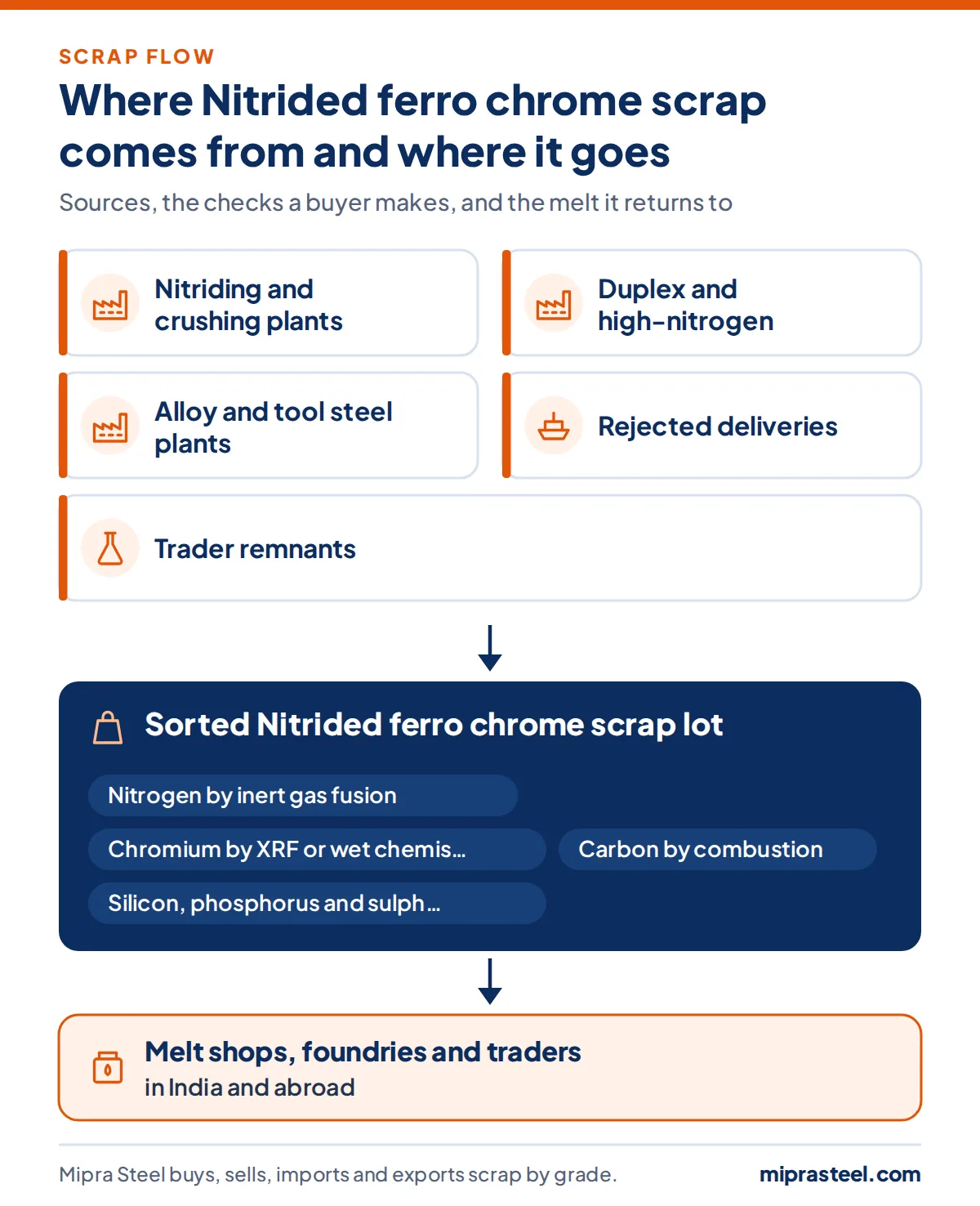
| Nitrogen by inert gas fusion | The defining test. A laboratory fusion analyser gives the nitrogen percentage the lot is sold on. |
| Chromium by XRF or wet chemistry | Confirms the chromium figure and that the material is ferro chrome, not ferro manganese or ferro silicon. |
| Carbon by combustion | Should be low, reflecting the LC base; a high figure points to a mix with medium or high-carbon chrome. |
| Silicon, phosphorus and sulfur | Reported with the main elements because stainless specifications restrict them. |
| Size distribution | A sieve test gives the band and the share passing a few millimetres; nitrided products are often sold in finer sizes than lump LC. |
| Moisture and packing | Fines are checked for water pickup, and bag labels are compared with the certificate. |
Grades Most Often Confused with Nitrided Ferro Chrome
- LC ferro chrome: same chromium and carbon range but only a trace of nitrogen; indistinguishable without a nitrogen analysis.
- High-carbon ferro chrome: looks the same and has similar chromium, but carries several per cent carbon, which a combustion test shows at once.
- Nitrided ferro manganese: another nitrogen carrier for steelmaking; XRF shows manganese in place of chromium.
Looks Like Plain Ferro Chrome
Nitrided and plain LC ferro chrome are both grey and brittle, so only a nitrogen analysis tells them apart.
XRF Cannot See Nitrogen
A handheld XRF reading that matches LC ferro chrome does not show whether the material has been nitrided.
Documentation Matters
Because the two look the same, the producer certificate or an independent nitrogen analysis is the practical way to identify the lot.
Where Nitrided Ferro Chrome Scrap Comes From
Very little nitrided ferro chrome is ever "used". The traded lots are leftovers and rejects from production and steelmaking.
Nitriding and Crushing Plants
Screening after nitriding leaves undersize below the contracted band, and some batches finish outside the ordered nitrogen range.
Duplex and High-Nitrogen Stainless Shops
A change in product mix leaves full and part-used bags; a closed melt line can release a whole store at once.
Alloy and Tool Steel Plants
Small consumers of nitrogen-bearing grades accumulate part drums over years of trim additions.
Rejected Deliveries
Shipments refused for low nitrogen, high carbon or excess fines are resold under a corrected description.
Trader Remnants
Mixed or relabelled bags in trading yards that need a fresh analysis before they can be offered.
Nitrided Ferro Chrome Scrap Buyer, Importer and Exporter in India
Mipra Steel deals in nitrided ferro chrome from Khetwadi, Mumbai, buying off-grade, fines and surplus lots and supplying described material to stainless, duplex and alloy steel producers.
Sell Nitrided Ferro Chrome Scrap
Holding nitrided ferro chrome you no longer need? Tell us the nitrogen band, chromium and carbon from the certificate or a recent analysis, the size range, quantity, packing and location. Photograph the material and every distinct bag label. If plain LC ferro chrome was stored in the same area, say so, because a buyer will want the nitrogen confirmed across the lot. We review incoming enquiries and respond with relevant next steps.
Buy Nitrided Ferro Chrome Scrap
Sourcing a nitrogen carrier for duplex or high-nitrogen stainless? State the nitrogen band and minimum chromium you need, your carbon limit, the size band your ladle or furnace handles and the monthly tonnage. Off-grade and fines lots can suit plants that inject or bag their additions, and each lot is described from its own analysis.
Preparing Nitrided Ferro Chrome Scrap for Sale
- Store nitrided material apart from plain LC and HC ferro chrome, with its own labels.
- Sample across several bags for nitrogen, chromium and carbon, not from one lump.
- Screen out fines and pack them separately.
- Keep bags covered and off the ground to stop moisture pickup.
- Match every bag label to its certificate before offering the lot.
Nitrided Ferro Chrome Scrap Price per Kg: What Decides It
A nitrided ferro chrome lot is paid on two elements, chromium and nitrogen, and then adjusted for what limits its use.
- Nitrogen band: the higher, certified nitrogen grade suits more high-nitrogen melts and is valued accordingly.
- Chromium content: still the bulk paying element in every tonne.
- Carbon: low carbon is expected; a lot that drifts upwards loses its place in low-carbon stainless.
- Phosphorus and sulfur: excess rules out some stainless and duplex specifications.
- Size and fines: furnace and ladle users want a defined band; dust and very fine material are discounted.
- Contamination and moisture: plain LC chrome, other ferro alloys, sand or water in the lot all reduce the offer.
- Certificate match: bag marks that tie to a producer certificate cut retesting.
Chromium is quoted daily and nitrogen premiums depend on stainless demand, so no price holds for long. The ferro alloy value guide covers unit pricing.
Nitrided Ferro Chrome Scrap Import and Export
Importing Nitrided Ferro Chrome Scrap into India
Stainless and duplex melt shops in India, with large capacity in Odisha and Haryana, buy nitrided ferro chrome from both domestic and overseas sources, and imported surplus and off-grade lots are part of that supply. It is typically declared as ferrochromium with not more than 4% carbon under HS 7202.49; confirm the national line with your customs broker. Consignments travel with the producer or independent analysis, commercial invoice, packing list and bill of lading, and remnant or scrap lots also follow pre-shipment inspection practice. Writing "nitrided ferro chrome" and the nitrogen figure on the invoice prevents it being entered as plain LC. See India import procedure.
Exporting Nitrided Ferro Chrome Scrap from India
Surplus nitrided ferro chrome held in India finds buyers among stainless and alloy steelmakers in the Gulf, East Asia and Europe. Export lots are invoiced with nitrogen, chromium and carbon content and size band, packed in jumbo bags or drums and shipped in containers. Our Dubai and South Korea offices cover buyers in those regions, and we also ship to Japan. See export documents.
Customs heading: 7202.49. The HS code is the international tariff heading the scrap is declared under; national tariff lines add further digits, so confirm the full line with your customs broker.
Related Reading
Nitrided Ferro Chrome Scrap FAQ
What is nitrided ferro chrome used for?
It is added to stainless and alloy steel to supply chromium and nitrogen together. Duplex, super duplex and high-nitrogen austenitic grades use it because nitrogen raises strength and pitting resistance and stabilises austenite. A weighed solid addition is easier to control than relying on nitrogen gas alone.
How much nitrogen does nitrided ferro chrome contain?
Commercial grades are commonly offered in two bands, roughly three to four per cent nitrogen and a higher band from about six per cent upward, with chromium in the low-to-mid sixties. The certificate for each lot gives the actual figure, and off-grade lots are sold on their measured value.
Can XRF tell nitrided ferro chrome from LC ferro chrome?
No. Handheld XRF reads chromium and iron but cannot detect nitrogen or carbon. Only inert gas fusion analysis in a laboratory confirms nitrogen. See XRF, OES and lab methods.
Is N-FeCr classed separately for customs?
Generally not. Nitrided ferro chrome is still ferrochromium, and with its low-carbon base it typically falls under HS 7202.49 along with LC ferro chrome. National lines add digits, so a customs broker should confirm the exact entry.
What happens to a nitrided lot that came out below its nitrogen band?
It is re-described and sold on its measured nitrogen. A melt shop needing less nitrogen, or one blending with gas injection, can still use it, so a below-band lot is not waste, it is simply a different specification.
Does Mipra Steel take part-used bags of nitrided ferro chrome?
Yes. Part-used, opened and long-stored bags can be offered. Tell us the number of bags, how full they are, the storage conditions, and send the original certificate if you have it, plus photographs of the material and labels.
Published by Mipra Steel, Khetwadi, Mumbai · Updated