MAR-M 247 Scrap Buyer, Importer and Exporter in India
Mipra Steel buys and sells MAR-M 247 scrap from Khetwadi, Mumbai, handling foundry revert, rejected castings and ex-service blades from India and abroad.
Sell MAR-M 247 Scrap
Selling MAR-M 247 revert or blades? Tell us whether the material is foundry revert, rejected castings, engine-run blades or swarf, the approximate weight and the location. Send photographs that show the gating or airfoil shapes, plus any heat numbers, cast certificates or readings showing hafnium and tantalum. Say if the lot is described as 247C or 247 LC. We review incoming enquiries and respond with relevant next steps.
Buy MAR-M 247 Scrap
Casting houses and alloy makers looking to buy MAR-M 247 scrap should tell us the form they can charge (revert, solid blades, or both), the quantity, whether CM 247 LC material is acceptable, the destination and timing. Lots are described by grade and by what analysis shows, and we can discuss which certificates or readings travel with them.
What Is MAR-M 247 and Why Is Its Scrap Traded Separately?
MAR-M 247 came out of Martin Metals in the early 1970s as a high creep-strength casting alloy for turbine hot sections. It was designed for equiaxed parts, and it took well to directional solidification once hafnium was in the recipe. That hafnium, about 1.5%, is what separates it from its parent MAR-M 246 and what helps a cast blade resist cracking along its grain boundaries. Around 62% of the alloy by volume is the gamma prime phase, which is why it holds strength so close to its melting range. See how gamma prime superalloys work.
For a melt shop, a tonne of clean 247 revert is a tonne of ready-made master alloy: roughly 100 kg of tungsten, 100 kg of cobalt, 30 kg of tantalum and 15 kg of hafnium, already alloyed with nickel, chromium and aluminium in the right ratios. Buying those elements separately and melting them in is slow and costly. That is the whole reason casting houses want their own 247 back, and why a mixed superalloy lot that contains 247 is worth far less than the same metal kept apart.
The trade uses several names for lots of this alloy. CM 247 LC is a separate, related alloy derived from MAR-M 247 in 1978 for thin-walled directionally solidified blades: carbon drops from about 0.15% to 0.07%, and titanium and zirconium are trimmed as well. "MAR-M 247 LC" in a lot description normally follows that low-carbon meaning. "247C" has no published definition; it is simply a name buyers and sellers use, and such lots are described by what an analysis shows rather than by the label.
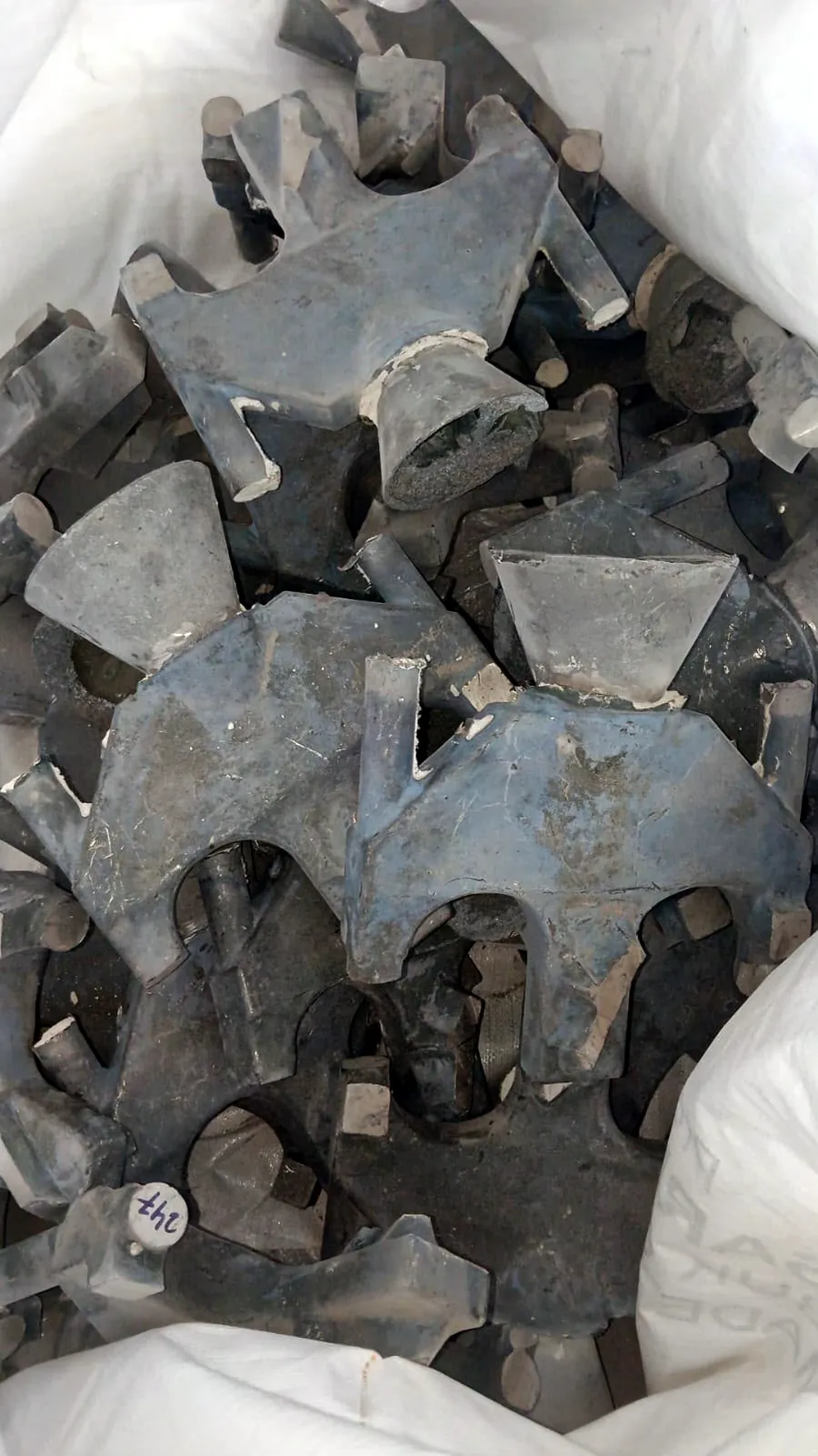
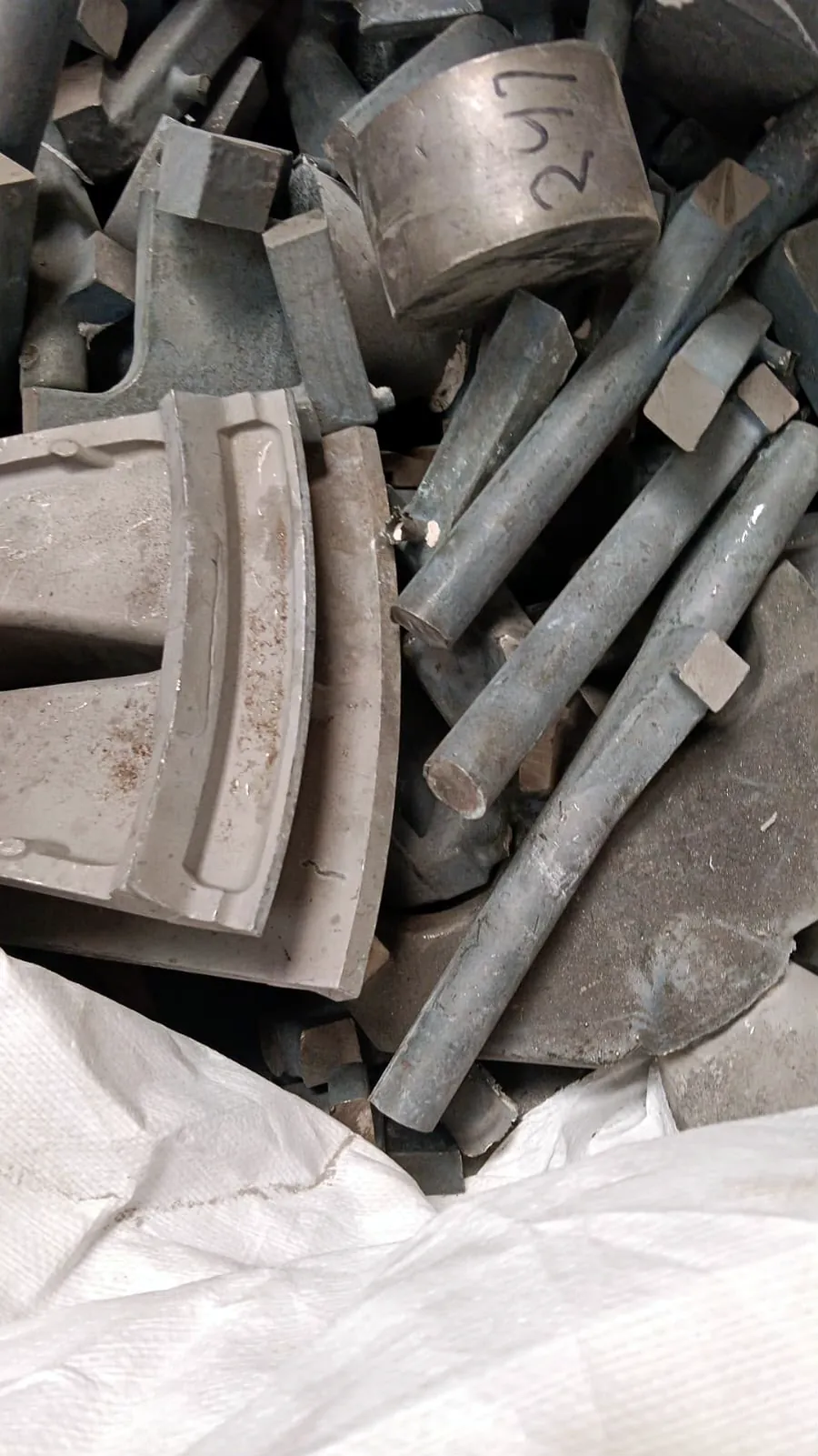
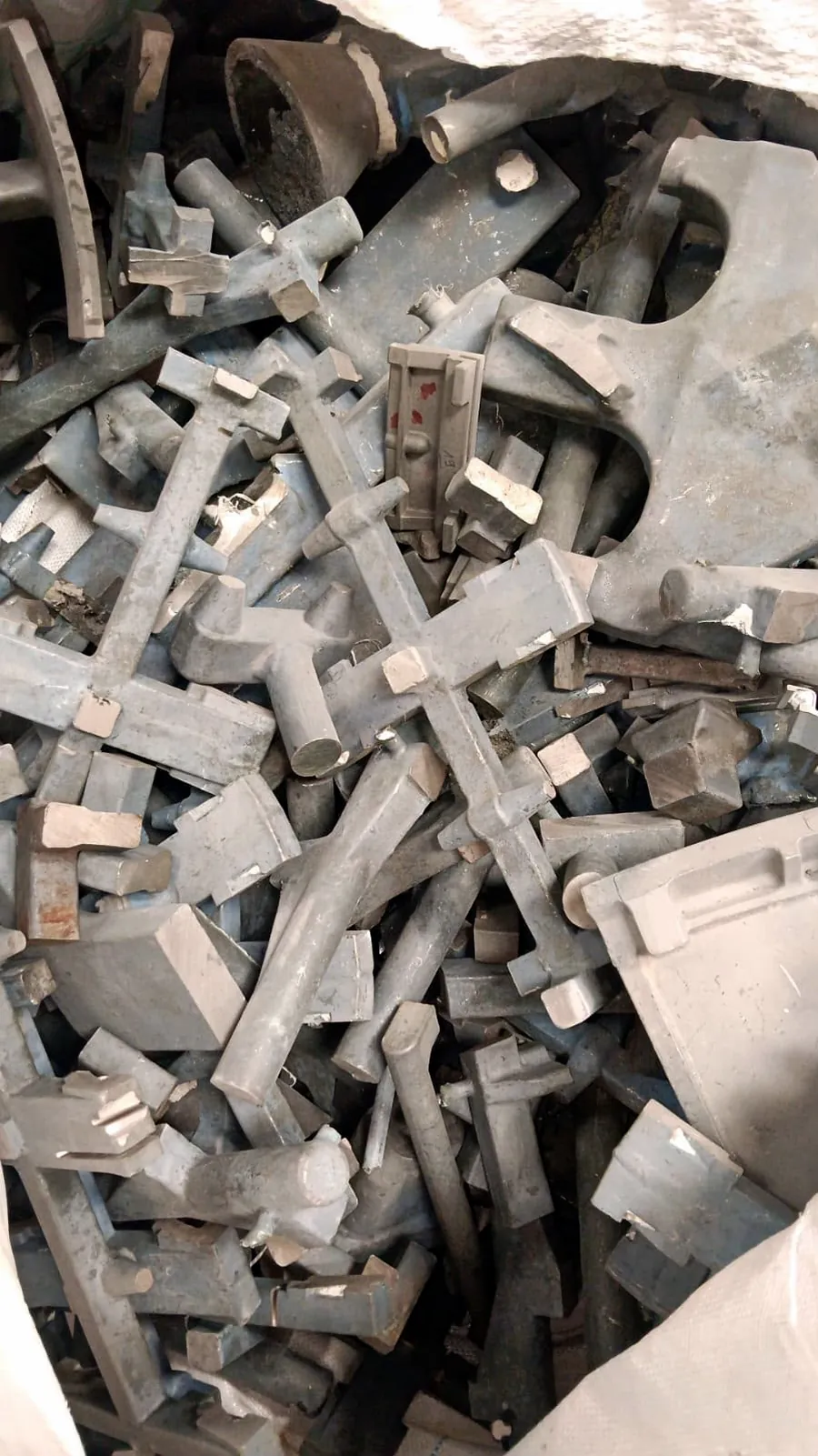
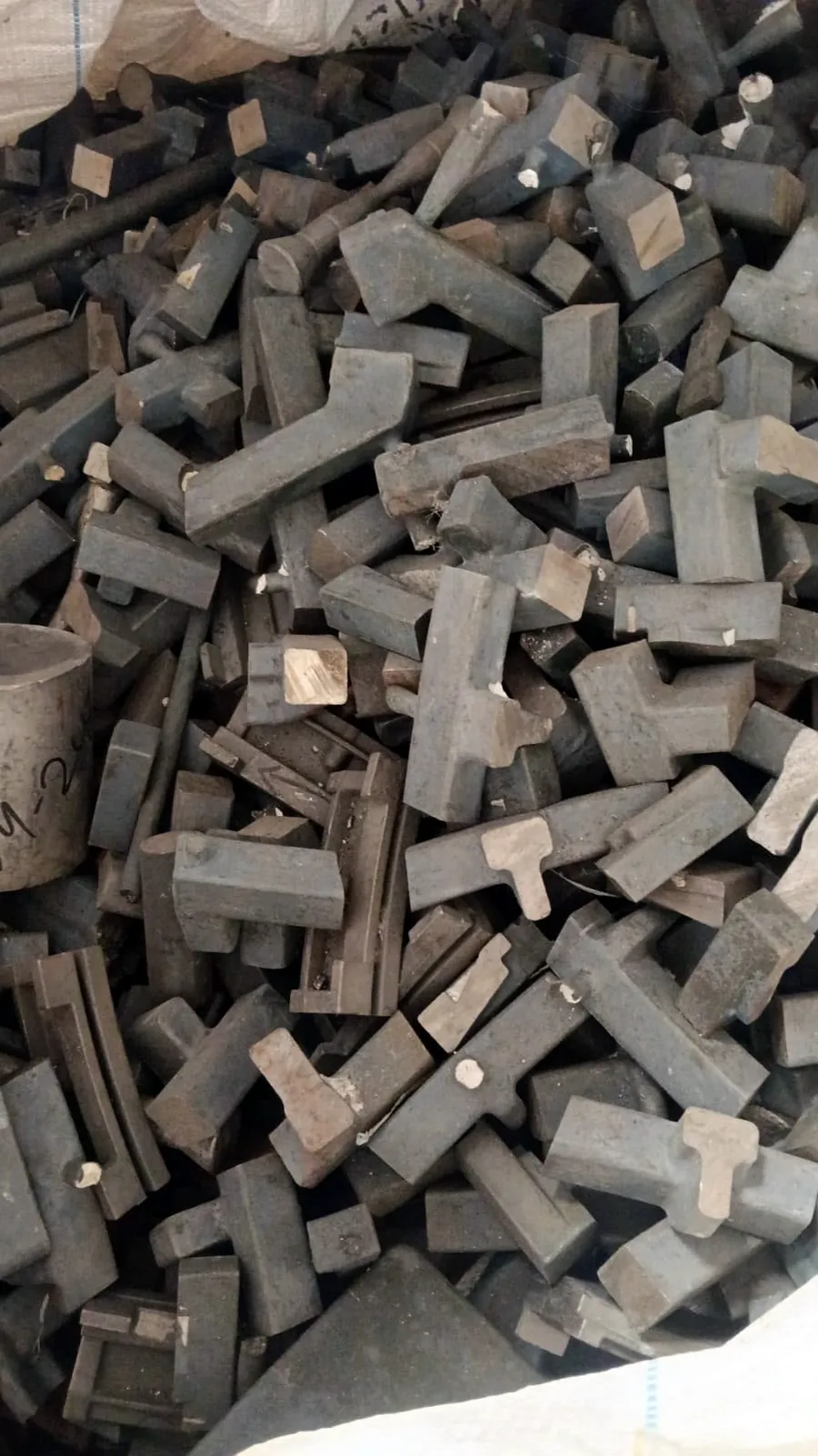
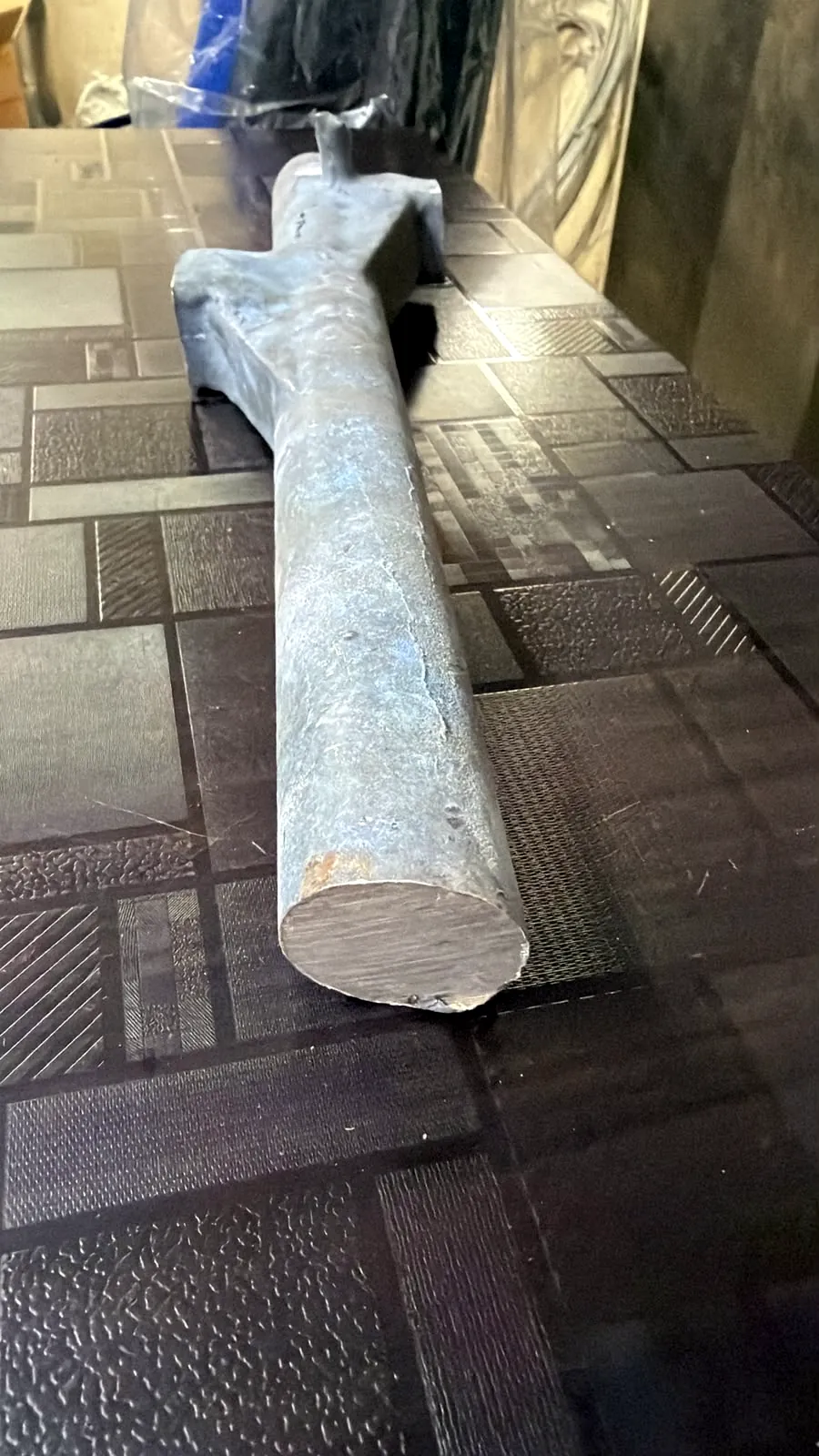
The lot photos on this page show exactly what typical 247 revert looks like: gating trees, sprues, cut risers and pour cups, one piece still marked with its grade number.
MAR-M 247 belongs to the MAR-M family, part of superalloy scrap.
Where MAR-M 247 Scrap Comes From
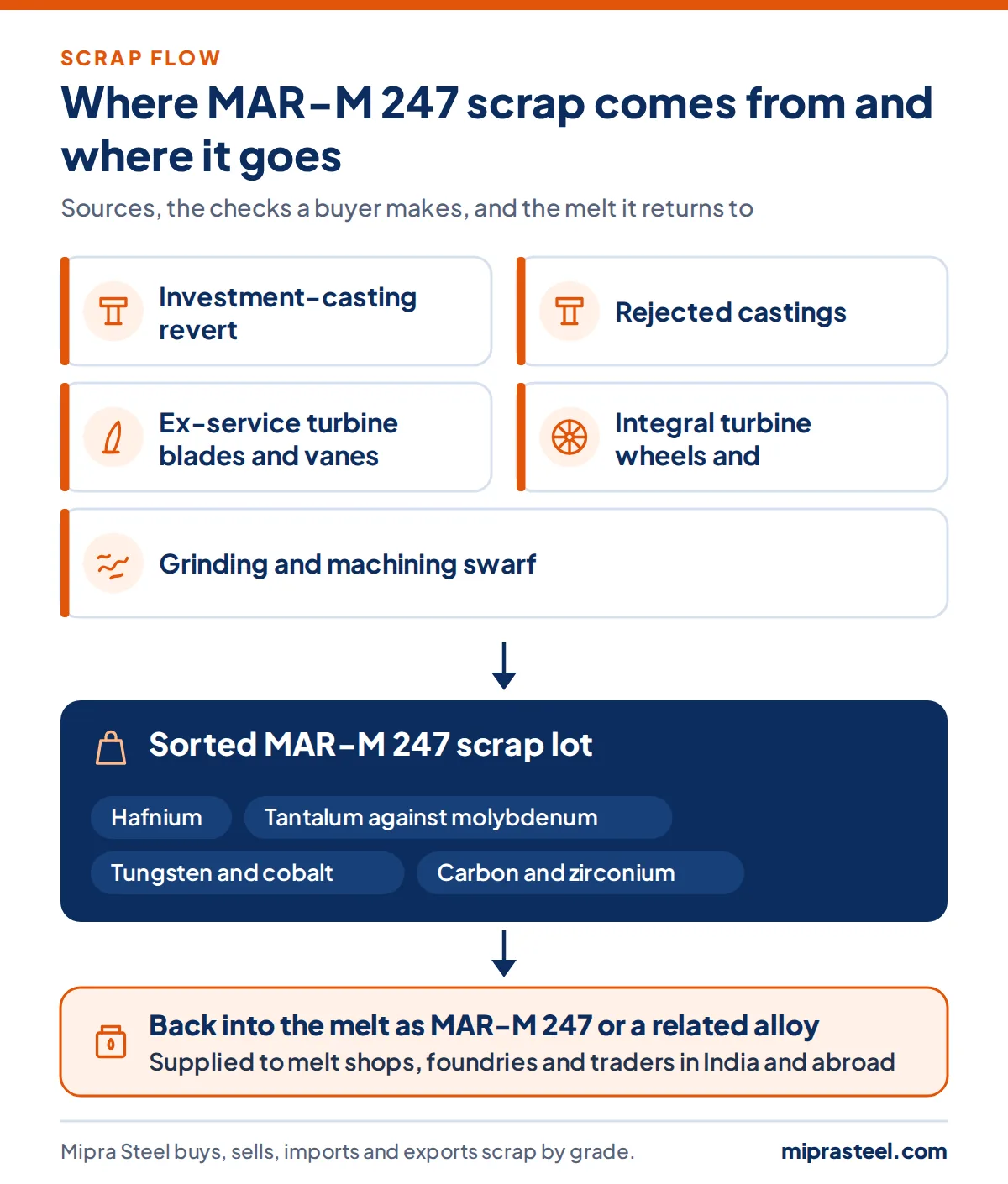
Almost all 247 that reaches the scrap market starts in a vacuum investment foundry. It leaves either as foundry returns or, years later, as engine-run parts.
Investment-Casting Revert
Gates, runners, sprues, risers and pour cups cut off blade, vane and wheel castings. Revert is the cleanest form of 247 and is often traceable to a known heat. See how superalloy revert is recycled.
Rejected Castings
Blades and wheels scrapped for porosity, misruns or dimensional faults at inspection. Chemistry is correct, but some still hold ceramic core material inside hollow airfoils.
Ex-Service Turbine Blades and Vanes
Directionally solidified and equiaxed blades from aero engines and smaller gas turbines, removed at overhaul. These usually carry an oxidation-resistant coating. See selling turbine blade scrap.
Integral Turbine Wheels and Turbocharger Parts
Cast wheels for small gas turbines and demanding turbocharger service, scrapped after damage or at life limit.
Grinding and Machining Swarf
Root-form grinding of blades produces fine swarf. It is a separate, lower-value material and should never be bagged with solid revert.
MAR-M 247 Scrap Specification Chart
| Grade | MAR-M 247 |
|---|---|
| UNS | Not assigned (proprietary MAR-M trade-name alloy) |
| W.Nr. / EN | Not assigned |
| Identified by | Customer or OEM specification, heat certificate and analysis |
| Also known as | Mar-M247, MM247, MAR-M 247C, MAR-M 247 LC, CM 247 LC (related grade) |
| Alloy type | Cast γ′ superalloy |
| Density | 8.54 g/cm³ (0.309 lb/in³) |
| Magnetic | Non-magnetic. |
| HS code (customs heading) | 7503.00 (nickel waste and scrap) |
MAR-M 247 Chemical Composition
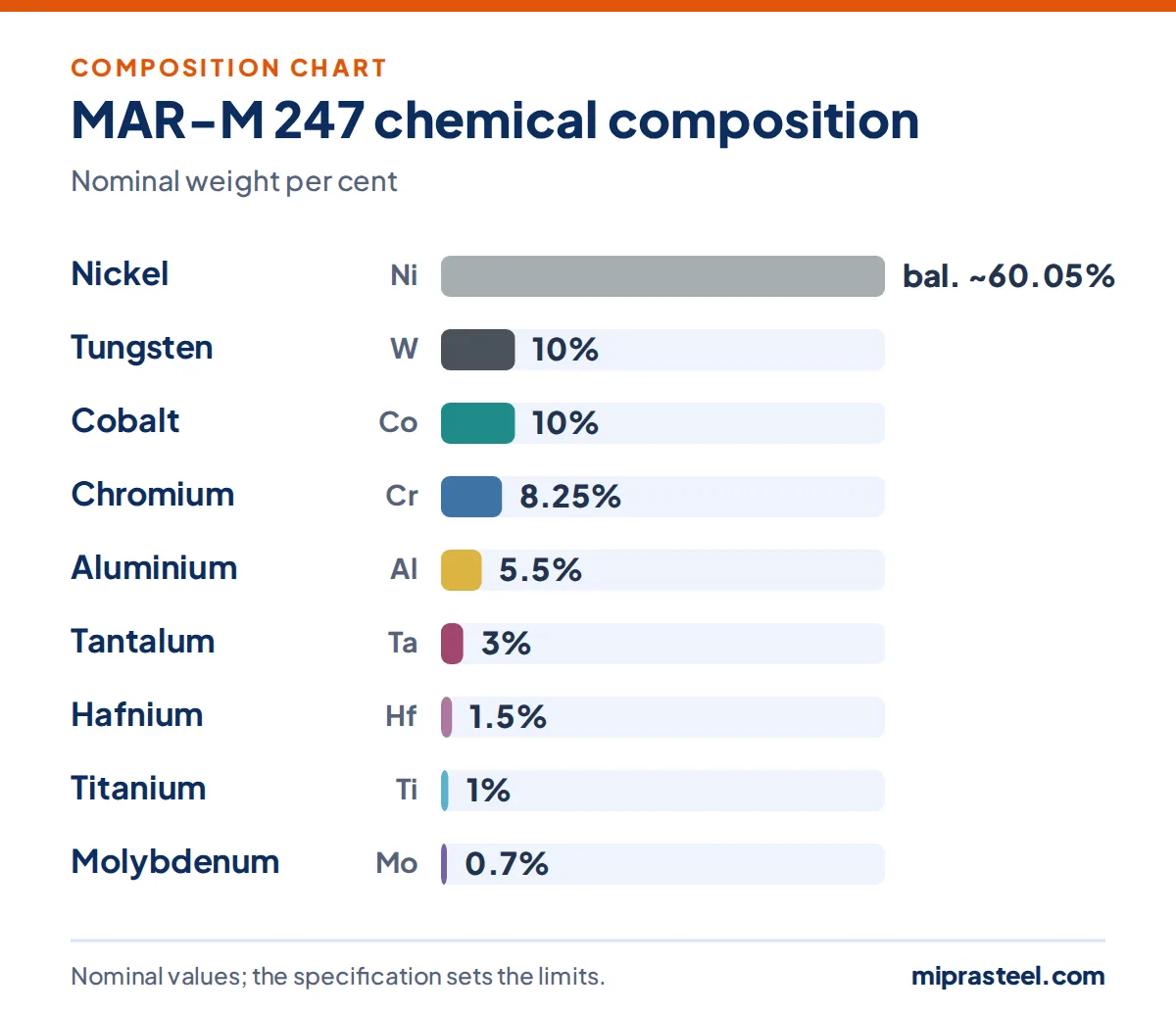
Nominal composition in weight per cent, used to describe and identify the grade. The governing specification sets the limits for each product.
| Element | Symbol | Nominal wt% | |
|---|---|---|---|
| Nickel | Ni | Balance (about 60.1) | |
| Tungsten | W | 10 | |
| Cobalt | Co | 10 | |
| Chromium | Cr | 8.3 | |
| Aluminium (aluminum) | Al | 5.5 | |
| Tantalum | Ta | 3 | |
| Hafnium | Hf | 1.5 | |
| Titanium | Ti | 1 | |
| Molybdenum | Mo | 0.7 |
MAR-M 247 Equivalent Grades and Other Names
| Designation | Value |
|---|---|
| Trade name | MAR-M 247 |
| UNS | Not assigned (proprietary MAR-M trade-name alloy) |
| W.Nr. / EN | Not assigned |
| Other names in the trade | Mar-M247, MM247, MAR-M 247C, MAR-M 247 LC, CM 247 LC (related grade) |
Look up any designation in the grade name converter or the equivalent grade chart.
MAR-M 247 Standards and Specifications
Supplied to AMS and OEM specifications.
MAR-M 247 Applications
- Directionally solidified turbine blades and vanes
- Integral turbine wheels
- Turbocharger components in demanding service
Source industries: aerospace, power generation.
How MAR-M 247 Scrap Is Identified
No magnet or spark test separates 247 from its neighbours. Every serious buyer works from an XRF or OES reading, and the elements to watch are hafnium, tantalum and molybdenum.
| Check | What it shows for MAR-M 247 |
|---|---|
| Hafnium | About 1.5% hafnium is the first thing to confirm. A reading near zero with the same tungsten and cobalt points to MAR-M 246. |
| Tantalum against molybdenum | 247 reads about 3% tantalum with under 1% molybdenum. Reverse that balance (2.5% molybdenum, 1.5% tantalum) and you are looking at 246. |
| Tungsten and cobalt | Both near 10%. A reading of about 7% tungsten with 2.5% titanium suggests René 125 instead. |
| Carbon and zirconium | A handheld XRF cannot read carbon. Separating standard 247 from low-carbon CM 247 LC material needs OES or a laboratory result. See XRF, OES and lab analysis compared. |
| Coating and core | Grind through the coating on ex-service blades before reading, and check hollow airfoils for retained ceramic core, which adds weight but no metal. |
| Markings and paperwork | Foundry heat numbers, part numbers and cast certificates often survive on revert and rejected castings. They make a lot far easier to describe. |
Grades Most Often Confused with MAR-M 247
- MAR-M 246: same 10% tungsten and 10% cobalt, but about 2.5% molybdenum, 1.5% tantalum and no hafnium.
- René 108: very close: about 9.5% tungsten, 9.5% cobalt, 3% tantalum and 1.5% hafnium, with 0.7% titanium and 0.5% molybdenum. Paperwork usually settles it.
- René 125: also hafnium-bearing, but with about 7% tungsten, 3.8% tantalum and 2.5% titanium.
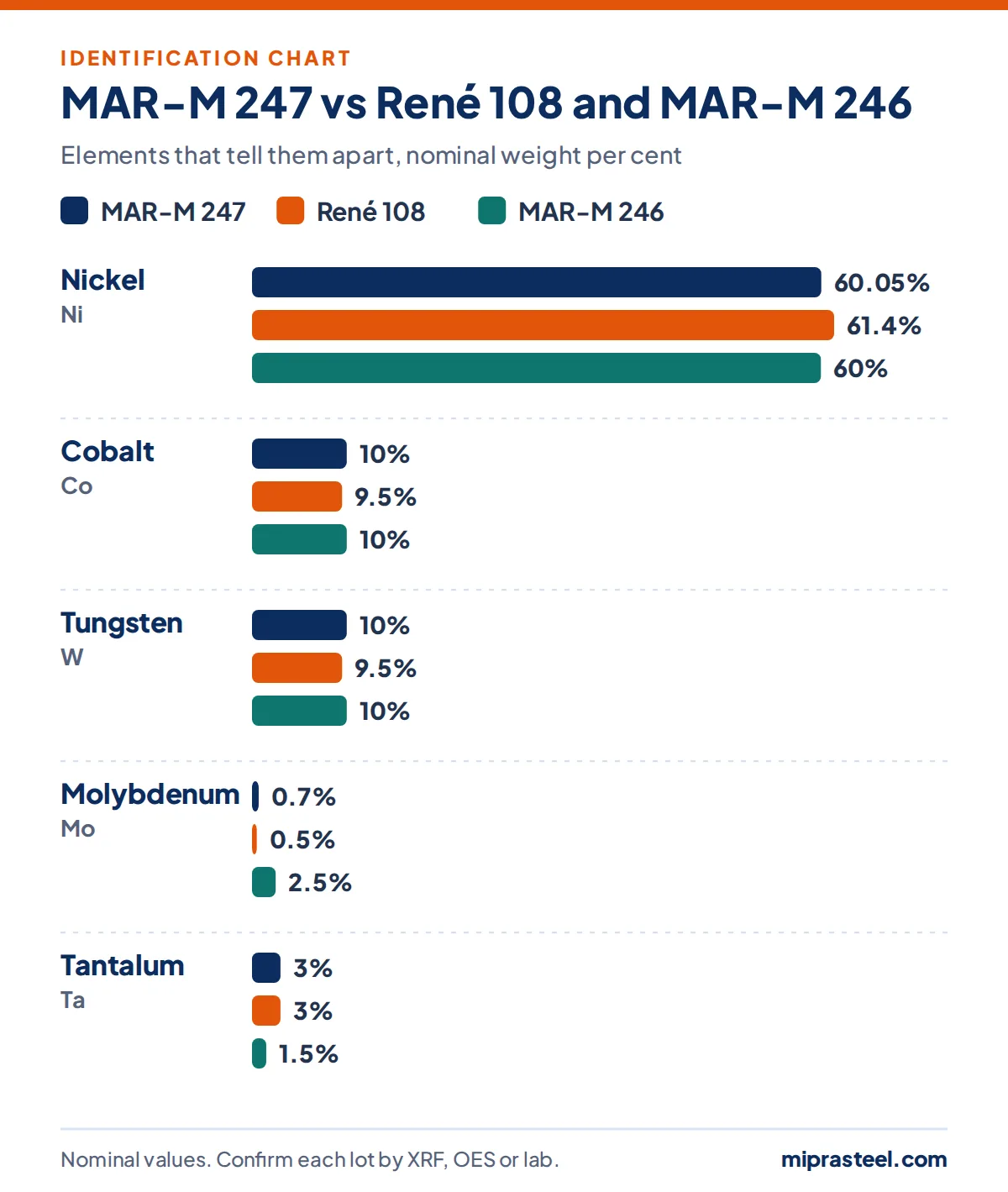
Nominal values for MAR-M 247 against its closest grades on this site.
Preparing MAR-M 247 Scrap for Sale
- Keep 247 revert apart from 246, René alloys and every other superalloy, piece by piece.
- Bag CM 247 LC and lots sold as 247 LC separately from standard 247, with the analysis that supports the description.
- Knock off loose ceramic shell from gating and pour cups before weighing.
- Keep grinding swarf in sealed drums, away from solid revert.
- Bag ex-service coated blades as their own lot and do not mix them with clean revert.
- Photograph any grade marks or heat numbers and keep foundry paperwork with the lot.
MAR-M 247 Scrap Price per Kg: What Decides It
Nobody can quote a fair MAR-M 247 scrap price per kg without seeing the lot. The offer is built from contained metal and then adjusted for how directly a melter can reuse it.
- Contained tungsten, cobalt, tantalum and hafnium. These four carry most of the value beyond the nickel, and their own markets move independently.
- Revert versus engine-run material: clean foundry revert can go straight back into a 247 melt, while coated, oxidised ex-service blades need more work and attract a deduction.
- Certainty of grade. A lot proven to be 247 alone is worth more than one where 246, René 108 or CM 247 LC might be mixed in.
- Ceramic shell and core residue on gating and hollow castings, which is paid as weight but contributes no metal.
- Form and size: solid revert pieces sell differently from grinding swarf, and full container loads cost less per tonne to handle.
- Documents such as foundry certificates or heat records, which let a buyer feed the lot to a melt without re-qualifying it.
Cobalt, tungsten and tantalum prices move independently of nickel, so any offer is dated. The general method is explained in what decides nickel alloy scrap value.
MAR-M 247 Scrap Import and Export
Importing MAR-M 247 Scrap into India
Much of the 247 that reaches India arrives as foundry revert and overhaul scrap from countries with aero-engine and gas-turbine industries, and through traders in the Gulf. Imported metal scrap is inspected before shipment and travels with a pre-shipment inspection certificate, commercial invoice, packing list and bill of lading. Nickel-base superalloy scrap is typically declared under HS 7503.00; confirm the full national line with your customs broker. Describing the lot as MAR-M 247 revert, with readings for hafnium and tantalum attached, keeps the customs and commercial descriptions aligned. Shipments usually land at Nhava Sheva or Mundra. Read importing alloy scrap into India.
Exporting MAR-M 247 Scrap from India
Superalloy revert from Indian investment foundries and overhaul work is exported to melters and alloy producers abroad. For export, the invoice and packing list name the grade and form, lots are weighed and packed in bags or drums inside containers, and readings travel with them. Our offices in South Korea and the UAE are close to buyers and sellers of turbine material in East Asia and the Gulf, and we also serve Japan. See export documents for alloy scrap.
Customs heading: 7503.00 (nickel waste and scrap). The HS code is the international tariff heading the scrap is declared under; national tariff lines add further digits, so confirm the full line with your customs broker.
Other MAR-M Scrap Grades
Related Reading
MAR-M 247 Scrap FAQ
Is MAR-M 247 the same as CM 247 LC?
No, they are related but different alloys. CM 247 LC was derived from MAR-M 247 for directionally solidified blades with thin walls. It carries about 0.07% carbon against 0.15%, with lower titanium and zirconium and slightly less hafnium. Melters making one may not accept the other, so the two should be kept and described separately, backed by OES or laboratory analysis.
What does 247C mean on a scrap lot?
There is no published definition of 247C. It is a name the trade uses for some MAR-M 247 lots, and the safe way to treat it is as a label only. What matters to a buyer is the analysis behind the lot: hafnium, tantalum, tungsten and cobalt in the 247 range, and carbon if the buyer specifies it.
Why does MAR-M 247 contain hafnium?
Hafnium was added to improve intermediate-temperature ductility in cast parts and to reduce grain-boundary cracking when blades are directionally solidified. It is the main chemical difference between MAR-M 247 and MAR-M 246, and it is the element a buyer checks first when a lot is offered as 247.
Can coated ex-service 247 blades be sold as MAR-M 247 scrap?
Yes, but as engine-run blades, not as revert. The coating and any oxidation are not 247 chemistry, and hollow blades may still contain ceramic core. Those lots are valued on the metal they actually contain and kept apart from clean foundry returns.
Who buys MAR-M 247 scrap from India?
Vacuum investment foundries, superalloy remelt houses and alloy producers abroad, along with traders who supply them. Mipra Steel trades 247 lots from Mumbai and through its Dubai and South Korea offices. Send the form, weight, location and photographs, and we review incoming enquiries and respond with relevant next steps.
Under which HS code does MAR-M 247 scrap ship?
Because MAR-M 247 is nickel-base, its scrap is typically declared under HS 7503.00, nickel waste and scrap. The national tariff line adds further digits, so check the exact line with a customs broker in the importing country before the shipment leaves.
Is MAR-M 247 scrap worth more than René 80 scrap?
It usually carries more value per kg because of its higher tungsten and its tantalum and hafnium, which René 80 does not contain. The real gap on any day depends on tungsten, cobalt and tantalum prices and on the condition and certainty of each lot. See the René 80 scrap page for that grade's chemistry.
What is MAR-M 247 made of?
Nominally 60.1% nickel, 10% tungsten, 10% cobalt, 8.3% chromium, 5.5% aluminium, 3% tantalum, 1.5% hafnium, 1% titanium, 0.7% molybdenum. Specification ranges vary by product form and standard.
Published by Mipra Steel, Khetwadi, Mumbai · Updated