What Is Selenium Metallicum, and Where Do Off-Grade Lots Come from?
Selenium is never mined for itself. It collects in the anode slimes left in the tanks when copper is electrorefined, and refineries recover it from those slimes alongside tellurium, silver and gold. The result is sold as "selenium metallicum" to make clear it is the element, not a selenite or selenate salt. The grey form is brittle, has a dull metallic lustre, melts at about 221°C and weighs roughly 4.8 g/cm³, so a drum of it feels light for a "metal".
Its uses are spread thin. Metallurgy is the largest outlet worldwide, and much of that is electrolytic manganese, where selenium dioxide added to the cell improves current efficiency. Glass is the next: a very small dose cancels the green cast left by iron in clear glass, and larger doses give bronze or red tints. Pigments, agricultural products, chemicals and electronics take smaller shares. In steel, selenium is added to some free-machining grades, such as the selenium-bearing version of 303 stainless, to help chips break.
Because most selenium is consumed the first time it is used, almost nothing comes back as worn parts. Photocopier and laser printer drums once used selenium coatings, but newer machines use organic photoreceptors and that source has faded. What reaches the market today is off-grade: surplus drums at user plants, powder that has absorbed moisture, lots that fell short of a purity or particle-size clause, and material contaminated during handling. It keeps its basic chemistry, so it can be described and placed once it has been analysed.
Selenium dust is toxic, and that shapes the trade. Lots are judged on packing and labelling as well as purity, and shipping lines may treat selenium as dangerous goods. Every lot should travel with its safety data sheet.
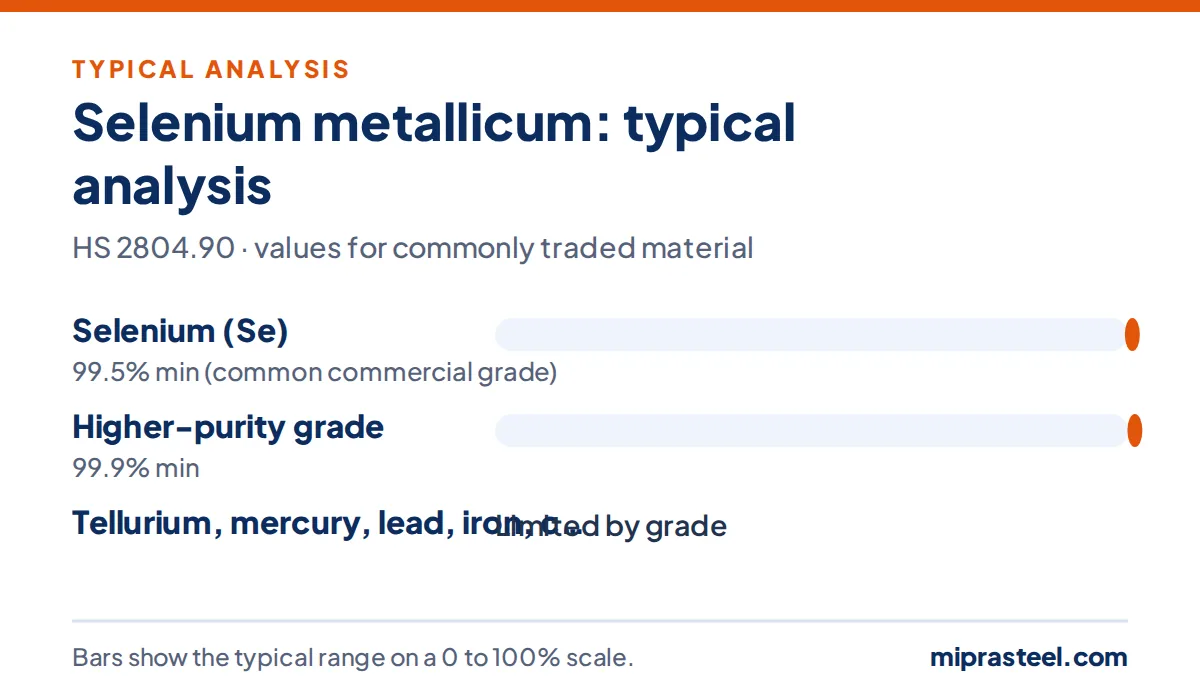
Typical Composition
| Element or property | Typical value |
|---|---|
| Selenium (Se) | 99.5% min (common commercial grade) |
| Higher-purity grade | 99.9% min |
| Tellurium, mercury, lead, iron, copper | Limited by grade |
Typical values for commonly traded material. The certificate or analysis of each lot governs.
Forms Selenium Metallicum Scrap Comes In
- Powder
- Granules
- Shot or pellets
- Lumps
- Off-grade lots
Where Selenium Metallicum Is Used
- Glass decolourising and tinting
- Electrolytic manganese production
- Pigments
- Free-machining steel and copper alloy additions
- Animal feed and agricultural products
What Buyers Check in a Lot
Purity
Selenium content is the main figure in the description and is confirmed by laboratory analysis.
Impurity Elements
Tellurium, mercury, lead, iron and copper are limited by grade and reported in the analysis.
Moisture
Powder can absorb moisture, which is measured and stated.
Form and Particle Size
Powder, granules, shot and lumps suit different users and are described separately.
Packaging and Labelling
Selenium is toxic, so the condition of drums, bags and labels is part of the lot description.
How to Recognise Selenium Metallicum
There is no bench test that grades selenium. A sealed sample, a laboratory analysis and a look at the packing are what buyers rely on.
| Check | What it shows for Selenium metallicum |
|---|---|
| Selenium assay | The headline figure, usually by wet chemistry or ICP. It decides whether the lot is a 99.5% or 99.9% grade or below both. |
| Tellurium | Tellurium travels with selenium out of the anode slimes and is the impurity most buyers read first. |
| Mercury and lead | Both are toxic and tightly limited, especially for glass, feed and chemical users. |
| Iron and copper | Usually picked up from handling and steel drums; reported on the analysis. |
| Moisture | Powder takes up water in humid storage. Moisture is measured because it is weight the buyer is not paying for. |
| Particle size and form | Powder, granules, shot and lumps go to different users; the size range is stated for powder. |
| Drum and label condition | Intact, sealed and legibly labelled drums are part of the description, given the toxicity. |
Grades Most Often Confused with Selenium Metallicum
- Tellurium: Also a grey, brittle by-product of copper refining, but heavier at about 6.2 g/cm³ and with a much higher melting point; an assay separates them.
- Selenium dioxide and selenite salts: White or pale crystalline compounds, not grey metal. They are chemicals with their own classification and are kept out of a metallicum lot.
Grey and Brittle
Grey selenium has a metallic lustre but shatters rather than bending, unlike most metals.
Low Melting Point
Selenium melts at about 221°C, far lower than common structural metals.
Not Magnetic and Relatively Light
Selenium is non-magnetic and has a density of about 4.8 g/cm³, lighter than steel and copper.
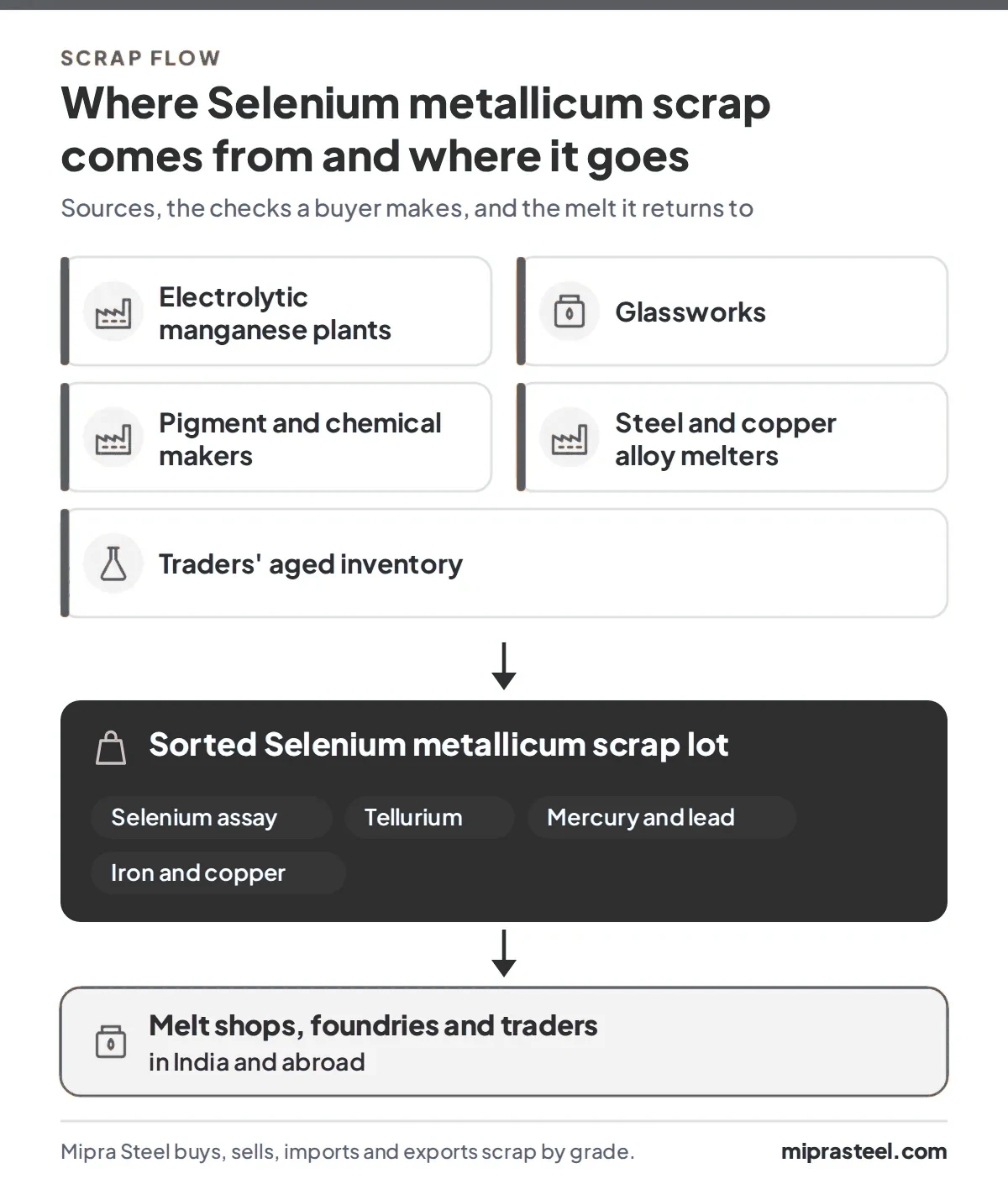
Where Selenium Metallicum Scrap Comes From
Off-grade selenium comes from the plants that consume it, not from demolition or machining.
Electrolytic Manganese Plants
These are large users. A plant that switches its additive or reduces output can hold surplus drums of powder or granules.
Glassworks
Float, container and tableware glass plants keep selenium for decolourising and tinting. Changes in batch recipe or furnace closures release unused stock.
Pigment and Chemical Makers
Producers of selenium-based pigments and selenium chemicals sometimes sell feed that has absorbed moisture or fails an impurity limit.
Steel and Copper Alloy Melters
Makers of free-machining steels and some machinable copper alloys hold selenium shot or lumps, and release it when a grade is discontinued.
Traders' Aged Inventory
Older drums whose labels or certificates have gone missing are resampled and re-described before they can move again.
Selenium Metallicum Scrap Buyer, Importer and Exporter in India
Mipra Steel trades off-grade and surplus selenium metallicum from Khetwadi, Mumbai, matching lots held by Indian and overseas plants with glass, manganese, pigment and alloy users.
Sell Selenium Metallicum Scrap
Holding surplus selenium powder, shot or lumps, or a drum that missed its grade? Tell us the form, net weight, number of drums and where they are stored. Send photographs of the drums, labels and seals, and attach the producer certificate, any recent analysis and the safety data sheet. If drums have been opened or exposed to damp, say so. Please do not open drums only to photograph the contents. We review incoming enquiries and respond with relevant next steps.
Buy Selenium Metallicum Scrap
Sourcing selenium for glass, electrolytic manganese, pigments or alloy additions? Send your minimum selenium content, limits on tellurium, mercury, lead and moisture, the form and particle size you need, the quantity and your delivery port. Off-grade lots can suit users whose limits are wider than a glass plant's, and each comes with the analysis and safety data sheet available for it.
Preparing Selenium Metallicum Scrap for Sale
- Keep drums sealed and stored dry, off the floor and away from acids and food or feed.
- Do not decant or repack powder without dust protection and local exhaust.
- Match every drum number to its certificate and safety data sheet.
- Set damaged or leaking drums aside and overpack them before transport.
- Keep tellurium, selenium compounds and other chemicals out of the selenium lot.
- Photograph labels, seals and drum condition rather than the open contents.
Selenium Metallicum Scrap Price per Kg: What Decides It
A selenium price per kg is set by the purity grade first, then by how much of the drum weight a buyer can actually use without extra refining.
- Purity: a lot that still meets 99.5% or 99.9% Se is described as that grade; anything lower has to find a user with wider limits.
- Tellurium, mercury and lead: high readings rule out glass, feed and chemical buyers.
- Moisture: wet powder carries water weight and may need drying before use.
- Form: shot and granules are easier to dose and handle than fine powder.
- Packing and labels: damaged drums or missing labels add handling cost and reduce buyer confidence.
- Documents: a producer certificate and safety data sheet matched to drum numbers shorten the checking.
Selenium supply follows copper refining rather than selenium demand, so prices can move sharply. Offers are dated. See how ferro alloy and metal lots are valued.
Selenium Metallicum Scrap Import and Export
Importing Selenium Metallicum Scrap into India
India produces very little selenium of its own, so most of what Indian glass and manganese plants use is imported. Japan, South Korea, Belgium and Germany have been the main recent suppliers, reflecting where copper refineries recover it. Selenium is classified with the non-metals in Chapter 28, so the document set is that of a chemical element: commercial invoice, packing list, bill of lading, certificate of analysis and safety data sheet, with dangerous-goods declarations where the carrier requires them. Containers clear mainly at Nhava Sheva (JNPT) or Mundra. Confirm with your broker whether any additional permission applies to your end use; our import guide covers the general process.
Exporting Selenium Metallicum Scrap from India
India also exports small quantities of selenium, and surplus lots held by Indian users can suit glass and manganese producers in Asia and Europe. Export lots are described by purity, form and moisture, weighed, and packed in sealed, labelled steel or fibre drums with the safety data sheet attached to the booking. Our offices in the UAE and South Korea support enquiries from the Gulf and East Asia, and we also deal with buyers in the Netherlands. See export documents and check dangerous-goods rules with your forwarder.
Customs heading: 2804.90. The HS code is the international tariff heading the scrap is declared under; national tariff lines add further digits, so confirm the full line with your customs broker.
Related Reading
Selenium Metallicum Scrap FAQ
Which HS code covers selenium metallicum?
Selenium is typically classified under HS 2804.90, among the non-metals of heading 2804, rather than under a metal scrap heading. National lines add digits and may differ, so confirm the exact tariff line with your customs broker before shipping.
Why is it called selenium metallicum?
The name marks it as elemental selenium in its grey, metal-like form, as opposed to compounds such as selenium dioxide or sodium selenite. It is sold by purity, commonly 99.5% or 99.9%, in powder, granule, shot or lump form.
What is selenium used for in metallurgy?
Its largest metallurgical use is in electrolytic manganese production, where selenium dioxide improves the efficiency of the cells. Small amounts are also added to free-machining steels, such as a selenium-bearing 303 stainless, and to some copper alloys to help chips break during machining.
How does selenium decolourise glass?
Iron in sand gives clear glass a green tint. A very small selenium addition adds a pinkish tint that cancels the green, so the glass looks colourless. Larger additions, sometimes with cadmium compounds, give bronze or red glass.
Is old selenium from photocopier drums still around?
Very little. Older copiers and laser printers used selenium-coated drums, but newer machines use organic photoreceptors. Most selenium traded today is surplus or off-grade powder, shot and lumps rather than recovered drums.
Is it safe to store selenium in a warehouse?
It can be, with care. Selenium and its compounds are toxic, so keep drums sealed, dry, labelled and away from food, feed and acids, and follow the safety data sheet for handling and personal protection.
How can I offer or request selenium through Mipra Steel?
Sellers can share drum count, weight, form, location, photographs and certificates via the sell scrap form; buyers can send purity and impurity limits through contact. Mipra Steel handles selenium alongside other ferro alloys and pure metals.
Published by Mipra Steel, Khetwadi, Mumbai · Updated