What Is Misch Metal, and Why Is It Traded by Its Rare-Earth Mix?
The name is German for "mixed metal", and that is exactly what it is. Rather than separating cerium, lanthanum, neodymium and praseodymium from one another, a producer converts the mixed rare-earth concentrate to anhydrous chlorides and electrolyses the molten salt. Out comes a single alloy carrying the light rare earths in roughly the proportions the ore supplied them, which is then cast into ingots or rods. Because it skips the separation stage, misch metal delivers rare earths to the user far more cheaply than the pure elements would.
Users want it for chemistry, not strength. In steel, a small addition ties up sulfur and oxygen and turns long manganese sulphide stringers into small, rounded inclusions, which improves toughness across the rolling direction. In cast iron, rare earths sit alongside magnesium in nodularising alloys. Flint makers mix it with iron and magnesium to make ferrocerium, the spark source in lighters and fire starters. Battery alloy makers combine it with nickel in the MmNi5 family of hydrogen storage alloys, and some zinc-aluminium galvanising baths take a trace of it.
Grades differ mainly in the ratio of the rare earths. Standard material sits near the 50:25 cerium-to-lanthanum pattern, but cerium-rich and lanthanum-rich versions are also made, and a lanthanum-rich lot suits a battery alloy maker better than a steel plant. Iron, magnesium and other metals are held low and reported. A buyer reading an analysis therefore looks at total rare earths first, then the split between them, then the impurities.
Off-grade misch metal and its scrap share one trait that sets them apart from almost every other metal on this site: they react with air. Turnings and fines oxidise readily and can catch fire, and a scraped surface throws sparks. So condition and packing are part of the grade. The misch metal guide covers the background in more depth.
Typical Composition
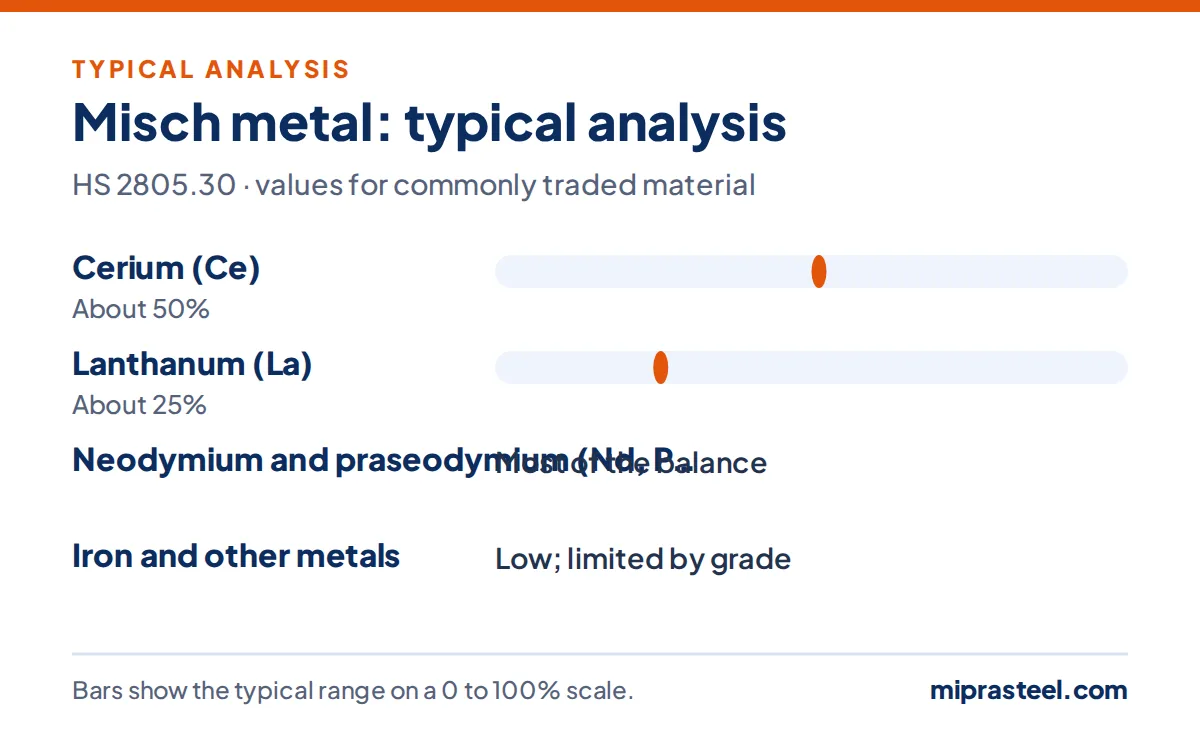
| Element or property | Typical value |
|---|---|
| Cerium (Ce) | About 50% |
| Lanthanum (La) | About 25% |
| Neodymium and praseodymium (Nd, Pr) | Most of the balance |
| Iron and other metals | Low; limited by grade |
Typical values for commonly traded material. The certificate or analysis of each lot governs.
Forms Misch Metal Scrap Comes In
- Ingots and ingot ends
- Lumps
- Offcuts
- Turnings
- Off-grade lots
Where Misch Metal Is Used
- Steel and cast iron treatment
- Ferrocerium lighter flints and fire starters
- Magnesium alloys
- Hydrogen storage alloys for NiMH batteries
What Buyers Check in a Lot
Rare-Earth Content
Total rare-earth content and the cerium and lanthanum figures are the main points of the analysis.
Ratio of Elements
Cerium-rich and lanthanum-rich grades suit different uses, so the ratio is stated.
Oxidation
Misch metal oxidises in air, so the surface condition and the share of oxide are noted.
Iron and Other Metals
Iron and other metals are limited by grade and reported in the analysis.
Form and Packaging
Fines and turnings are reactive and need dry, sealed packaging, which is part of the description.
How to Recognise Misch Metal
Misch metal is easy to recognise but hard to grade by eye. Analysis fixes the ratio; the bench checks catch the obvious errors.
| Check | What it shows for Misch metal |
|---|---|
| Total rare earths | A laboratory figure for combined cerium, lanthanum, neodymium and praseodymium. It is the base of any lot description. |
| Cerium-to-lanthanum ratio | Shows whether the lot is standard, cerium-rich or lanthanum-rich, which in turn decides who can use it. |
| Spark test | Scraping with a hard file gives a shower of sparks. Common structural metals do not do this, so it quickly flags misch metal or ferrocerium. |
| Iron and magnesium | Raised iron and magnesium suggest ferrocerium flint material rather than plain misch metal. |
| Surface oxide | A fresh cut is silvery; aged ingots turn dull grey to dark. The depth of oxide is noted because it is not recoverable metal. |
| Form and packing | Ingots, lumps, offcuts and turnings are described separately, and the packing method for turnings and fines is stated. |
Grades Most Often Confused with Misch Metal
- Ferrocerium flint offcuts: Sparks the same way but carries extra iron and magnesium, often near a fifth of its weight in iron; it is sold as a separate lot.
- Single rare-earth metals: Cerium or lanthanum metal looks identical, but XRF or ICP shows one dominant rare earth instead of the mixed pattern.
- Magnesium: Similar silvery colour and also flammable as fines, but far lighter and it does not spark when filed.
Sparks When Scraped
Misch metal throws sparks when scraped with a hard tool, which most common metals do not.
Tarnishes Quickly
A freshly cut surface is silvery but dulls and oxidises in air faster than steel or aluminium.
Moderate Density
Misch metal is heavier than aluminium and magnesium but lighter than steel, and XRF confirms the rare-earth mix.
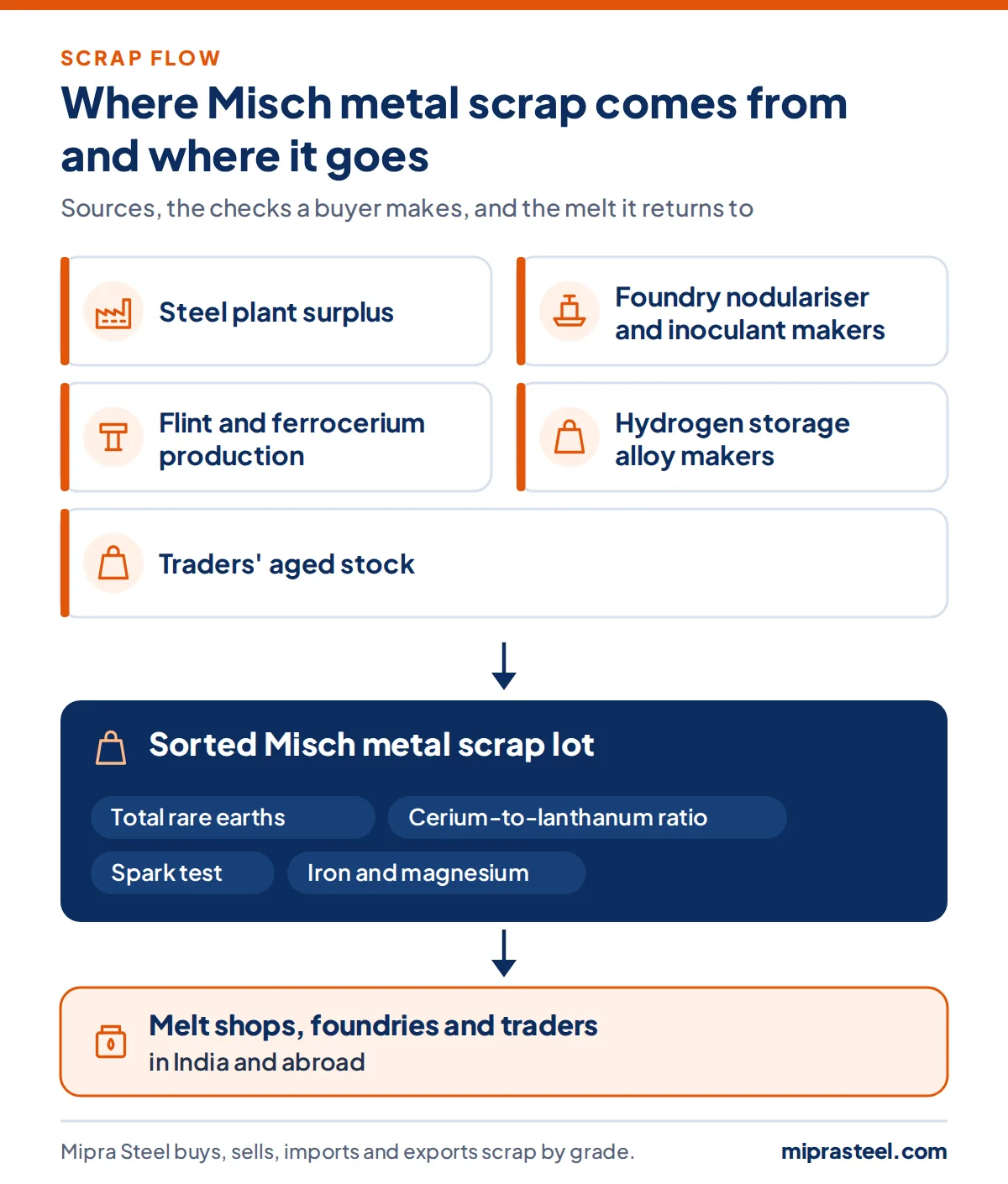
Where Misch Metal Scrap Comes From
Misch metal is consumed in small additions, so the material that comes back to market is mostly unused metal rather than worn parts.
Steel Plant Surplus
Mills that once treated steel with rare earths and later changed their inclusion practice can be left with sealed drums of ingot or rod.
Foundry Nodulariser and Inoculant Makers
Ingot ends, broken pieces and surplus rods remain after alloying campaigns; these keep the original analysis if they have stayed dry.
Flint and Ferrocerium Production
Casting and cutting of flint rods leave offcuts, rejected rods and ingot ends. These often carry added iron and magnesium and are described as ferrocerium, not plain misch metal.
Hydrogen Storage Alloy Makers
Producers of MmNi5-type battery alloys hold lanthanum-rich misch metal and may release lots that miss their ratio specification.
Traders' Aged Stock
Drums held for a long time can show oxide on the ingot surface. These are opened, inspected and re-described rather than sold on the old label.
Misch Metal Scrap Buyer, Importer and Exporter in India
Mipra Steel trades misch metal surplus and off-grade lots out of Khetwadi, Mumbai, between steel plants, foundry alloy makers, flint producers and traders.
Sell Misch Metal Scrap
Have drums of misch metal ingot, rod ends, offcuts or a lot that missed its ratio specification? Send the form, net weight, storage place and a few photographs, including one of a freshly cut or broken face if possible. Attach the producer certificate or analysis, and say how long the drums have been held and whether any have been opened. If the material is flint or ferrocerium offcut, mention that too. We review incoming enquiries and respond with relevant next steps.
Buy Misch Metal Scrap
Need misch metal for steel treatment, nodulariser production, flints or battery alloy? Tell us the total rare-earth minimum, the cerium and lanthanum ratio you work to, your limit on iron and magnesium, the form (ingot, lump or rod), the quantity and your port. Surplus and off-ratio lots can fit users with wider specifications, and each is offered with the analysis it came with.
Preparing Misch Metal Scrap for Sale
- Keep misch metal in sealed steel drums, dry and away from water and heat.
- Never sweep turnings or fines in with solid ingots or lumps.
- Separate flint and ferrocerium offcuts from plain misch metal.
- Break one piece to show a fresh face in the photographs.
- Record the date drums were opened and any visible oxide or swelling.
- Keep grinding wheels, cutting torches and sparks away from the storage area.
Misch Metal Scrap Price per Kg: What Decides It
A misch metal price starts with the rare earths a buyer can recover from the lot, then shifts with how safely and easily the material can be used.
- Total rare-earth content: the paying part of the lot, confirmed by analysis rather than by a drum label.
- Ratio of cerium, lanthanum, neodymium and praseodymium: a lot that matches a user's ratio specification finds a home faster.
- Iron, magnesium and other metals: higher levels suggest flint material and narrow the market.
- Oxidation: surface oxide and powdery corrosion products are deducted from the usable weight.
- Form: clean ingots and lumps travel and charge easily; turnings and fines need special packing and carry more risk.
- Packaging condition: sealed, dry drums with intact labels give a buyer confidence that the metal has not deteriorated.
Rare-earth prices move with supply from China, which dominates production, so any offer is dated. For how contained-metal offers are built, see ferro alloy and metal scrap value.
Misch Metal Scrap Import and Export
Importing Misch Metal Scrap into India
Most misch metal is produced in China, so surplus and off-grade lots reaching India usually originate there, either directly or through traders in East Asia and the Gulf. Because misch metal sits with the rare-earth metals in Chapter 28 rather than with base-metal scrap, the paperwork follows the chemical-metal route: commercial invoice, packing list, bill of lading, the producer analysis and a safety data sheet describing its flammability. Where a consignment is presented as scrap, a pre-shipment inspection certificate is also expected. Containers normally land at Nhava Sheva (JNPT) or Mundra. Check carrier rules on flammable solids before booking; see import procedures for alloy scrap for the general flow.
Exporting Misch Metal Scrap from India
Indian foundry alloy makers and steel plants sometimes release misch metal that buyers abroad can use for treatment alloys or flints. Export lots are listed by total rare earths, ratio and form, weighed and packed in sealed steel drums, with a safety data sheet supplied to the shipping line before booking. Our people in Dubai and South Korea help connect Indian lots with users in the Gulf and East Asia, including Japan. Shippers should read export documents for alloy scrap and confirm hazard classification with their forwarder.
Customs heading: 2805.30. The HS code is the international tariff heading the scrap is declared under; national tariff lines add further digits, so confirm the full line with your customs broker.
Related Reading
Misch Metal Scrap FAQ
What HS code does misch metal travel under?
Misch metal is typically classified with the rare-earth metals under HS 2805.30, not under a base-metal scrap heading. National tariff lines add further digits, so have a customs broker confirm the exact line for your country before you ship.
Why does misch metal throw sparks?
Its rare-earth content, mainly cerium, oxidises so readily that tiny particles torn off by a file ignite in air. That property is why it is the base of ferrocerium lighter flints, and why turnings and fines need careful, dry packing.
Is misch metal the same as ferrocerium?
No. Ferrocerium is misch metal blended with iron, often around a fifth by weight, and usually some magnesium to make it harder and spark more readily. Flint offcuts are therefore sold as their own lot.
What does misch metal do in steel?
It combines with sulfur and oxygen, turning long manganese sulphide stringers into small round inclusions. That improves toughness and bendability across the rolling direction. Additions are small and made late in the process.
Can old or oxidised misch metal ingots still be sold?
Usually, yes. Surface oxide is deducted, but the metal under it keeps its rare-earth content. Break a piece to show the core, report the share that is oxidised, and keep the drums sealed until a buyer inspects them.
Why does the lanthanum share matter to a buyer?
Different users want different ratios. Hydrogen-storage alloy makers prefer lanthanum-rich material, while steel and flint users are often content with standard cerium-rich material. A lot that matches the user's ratio needs no blending.
How do I discuss a misch metal lot with Mipra Steel?
Use the sell scrap page to share the form, weight, location, photographs and producer analysis, or contact us with your specification if you are buying. Mipra Steel deals in misch metal both ways, alongside other ferro alloys and pure metals.
Published by Mipra Steel, Khetwadi, Mumbai · Updated