Key takeaways
- ISO 5451 covers ferro vanadium from 35% to 85% vanadium; trade names such as FeV 50 and FeV 80 give the approximate figure.
- FeV 80 is made aluminothermically and carries aluminium as a residual; lower grades come from silicothermic smelting and carry silicon.
- Ferro vanadium scrap is off-grade, fines and surplus with unchanged chemistry, so it is traded on a fresh analysis, not the bag label.
- Value follows contained vanadium, adjusted for impurities, fines, moisture, mixing and quantity.
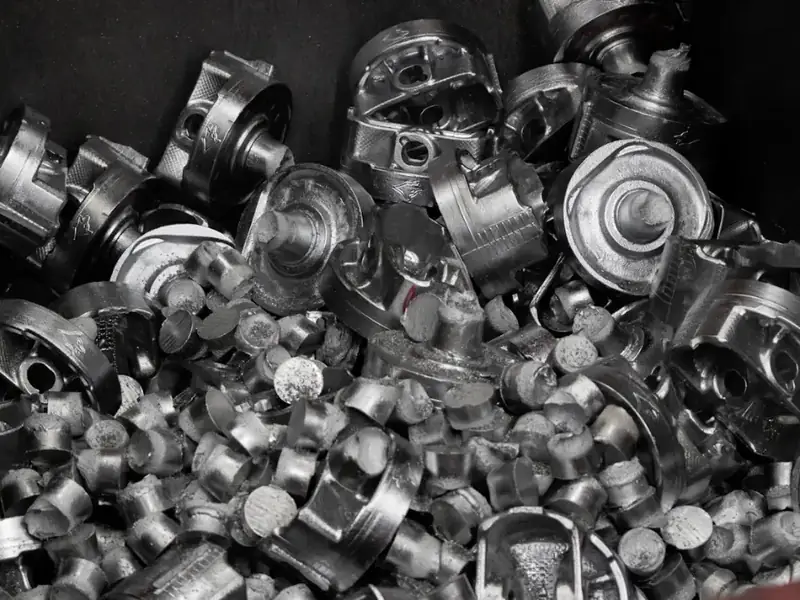
Ferro vanadium scrap rarely looks like scrap. It arrives as grey, crystalline lumps or a drum of fines that could pass for fresh alloy, because that is essentially what it is: ferro vanadium that has left the normal supply chain. The questions a buyer asks are the same as for new material, with one more added: can you prove which grade it is?
This guide explains the ferro vanadium grades, from FeV 40 to FeV 80, how each is produced, what ferro vanadium is used for in steel, where scrap and off-grade lots come from, and how they are sampled and valued. For a short product summary and HS details, see the ferro vanadium scrap page.
What Is Ferro Vanadium?
Ferro vanadium is a master alloy of iron and vanadium used to add vanadium to steel. ISO 5451 defines it as containing between 35% and 85% vanadium, with the balance mainly iron and limited amounts of aluminium, silicon, carbon, phosphorus and sulfur.
Vanadium does its work in steel in very small quantities. It combines with carbon and nitrogen to form extremely fine vanadium carbides and nitrides. These particles pin grain boundaries during rolling, giving a finer grain, and they block the movement of dislocations, raising strength without a large loss of toughness. In tool steels, larger amounts of vanadium form hard carbides that resist abrasive wear. Both effects explain why ferro vanadium sits in the shopping list of rebar mills as well as tool steel melt shops.
- 23VVanadiumthe paying element and the basis of the grade
- 13AlAluminiumresidue of aluminothermic reduction, limited in high grades
- 14SiSiliconresidue of silicothermic smelting in lower grades
- 6CCarbonlimited because many vanadium steels are low carbon
- 15PPhosphorusharmful to toughness, held low in every grade
- 16SSulfurheld low, as in all steelmaking additions
What Are the Ferro Vanadium Grades?
Ferro vanadium grades are named by their nominal vanadium content: FeV 40, FeV 50, FeV 60 and FeV 80 are the names most buyers use. The number is the approximate vanadium percentage, not a precise figure, and different standards draw the boundaries differently.
| Grade name in trade | Approximate vanadium | Usual production route | Typical buyers |
|---|---|---|---|
| FeV 40 | Around 35–50% | Silicothermic smelting in an electric arc furnace | Foundries and plants with older specifications |
| FeV 50 / FeV 60 | Around 50–65% | Silicothermic smelting | Rebar and long-product mills, general alloy steels |
| FeV 80 | Around 75–85% | Aluminothermic reduction | Flat-product HSLA steels, tool steels, plants charging high-grade additions |
National standards do not all use these labels. The current Indian draft revision of the ferrovanadium standard, for example, names its grades FeV54, FeV65 and FeV77, plus foundry grades with looser carbon and silicon limits. When a lot is offered as "FeV 50" or "FeV 80", ask which standard or contract the name refers to and look at the measured vanadium figure rather than the label.
What Is FeV 80 and Why Do Buyers Ask for It?
FeV 80 is the high-vanadium grade of ferro vanadium, with around 80% vanadium, made by reducing vanadium pentoxide with aluminium. Buyers ask for it because it carries more vanadium per tonne shipped, bagged and charged, and less iron that has to be paid for and handled.
The aluminothermic route leaves a small amount of aluminium in the alloy, which is why aluminium is a limited element in FeV 80 specifications. Lower grades made by silicothermic smelting carry silicon instead. Neither residue is a problem in normal amounts, but a melt shop making aluminium-sensitive steel will check the aluminium figure before accepting a high-grade lot.
Aluminothermic Route
- Reducing agent aluminium
- Typical product around 70 to 85 per cent vanadium, FeV 80
- Residue to watch aluminium
Silicothermic Route
- Reducing agent silicon from ferro silicon in an electric arc furnace
- Typical product around 35 to 60 per cent vanadium
- Residue to watch silicon
A bag of FeV 80 and a bag of FeV 50 look the same: grey, angular, brittle lumps. The difference in vanadium between them is large, which is why grade proof is the first thing to settle on any ferro vanadium lot.
What Is Ferro Vanadium Used for?
Ferro vanadium is used almost entirely in steelmaking, to add vanadium to high-strength low-alloy steels, reinforcing bar, tool and high-speed steels, and some rail, forging and spring steels.
- Reinforcing bar. Small vanadium additions raise the yield strength of rebar, so mills can meet higher strength classes without excessive carbon.
- HSLA plate, strip and sections. Vanadium is often used together with niobium in microalloyed steels for pipelines, bridges, cranes and vehicles. Niobium additions come from ferro niobium, which looks much the same in the bag.
- Tool and high-speed steels. Larger vanadium contents form hard carbides that keep tools sharp and resist abrasion. These grades often also carry tungsten from ferro tungsten and molybdenum.
- Forgings, rails and springs. Vanadium improves strength and fatigue behaviour in heavily loaded parts.
Some plants add vanadium together with nitrogen, using nitrogen-bearing vanadium additions, because vanadium nitride particles strengthen steel efficiently. That is a different product from plain ferro vanadium and is described separately if it turns up in a scrap lot. The wider family of steelmaking additions is set out in the guide to types of ferro alloys.
Where Does Ferro Vanadium Scrap Come from?
Ferro vanadium scrap comes from the supply chain rather than from used equipment. Vanadium that goes into steel stays in that steel, so there is no stream of worn ferro vanadium parts.
- Fines and undersize. Crushing and screening lumps to a size class always produces fine material, which some steel plants do not want because it is lost to fume extraction.
- Off-specification melts. A heat that misses its vanadium, aluminium or silicon limit, or a lot that misses its size class.
- Surplus at steel plants. Stock left when a mill changes its product mix or switches grade.
- Part-used bags and drums. Opened containers, sometimes repacked and relabelled, sometimes with the label lost.
- Floor sweepings and spillage. Usually mixed with dirt and other alloys and described as such.
Two other vanadium streams are worth separating in your head. Vanadium-bearing tool and high-speed steel scrap is remelted as steel scrap and keeps its vanadium in the melt; it is not ferro vanadium scrap. Spent refinery catalysts and certain slags are a source of vanadium that is processed back into oxide and then into new ferro vanadium; that is a chemical recovery route, not a scrap trade in the alloy. The general case for recycling these materials is covered in why ferro alloy scrap is worth recycling.
How Do You Identify the Grade of a Ferro Vanadium Lot?
Identify a ferro vanadium lot by measuring vanadium on several representative pieces, then confirming the light elements and impurities in a laboratory. Handheld XRF separates ferro vanadium from other ferro alloys in seconds and gives a useful vanadium reading, but it does not measure carbon and is weak on aluminium.
- Does niobium, molybdenum or tungsten lead the reading?Yesnot ferro vanadium, re-label the bag before anything else
- Is vanadium around 75 to 85 per cent?YesFeV 80 family, confirm aluminium in a laboratory
- Is vanadium around 50 to 65 per cent?Yesmid grade such as FeV 50 or FeV 60, confirm silicon
- Is vanadium around 35 to 50 per cent?Yeslow grade such as FeV 40
- Readings scattered across grades: mixed bags, split before sale
Readings that wander from bag to bag usually mean grades have been stored together. It is better to split them than to offer an average. A melt shop can work with a known FeV 50 lot; it cannot work with a pallet where half the bags are FeV 50 and half are FeV 80 and nobody knows which. Our comparison of XRF, OES and laboratory analysis explains why carbon and nitrogen need laboratory methods, and the guide to positive material identification covers how readings are recorded.
How Are Ferro Vanadium Lots Sampled and Described?
A ferro vanadium lot is described by its grade, measured vanadium, impurity levels, size class, fines share and quantity, supported by an analysis of a sample taken across the whole lot, not from one convenient lump.
The standards help here. ISO 5451 recognises lots made from a single melt, graded lots built from several melts whose vanadium contents differ by no more than 3% absolute, and blended lots crushed below 50 mm and mixed thoroughly. Size classes are also standardised; the Indian draft standard, for example, lists lump, crushed and fine classes running from 0–2 mm up to 10–70 mm. A seller who can say which of these a lot resembles saves the buyer a round of questions.
- 1Count and weighrecord bag count, gross and net weight, and any label information
- 2Read each bagXRF on several pieces per bag to find mixed grades
- 3Split or declareseparate bags of different grades, or describe the lot as mixed
- 4Sample across the lottake increments from many bags and crush to a laboratory sample
- 5Laboratory analysisvanadium, aluminium, silicon, carbon, phosphorus and sulfur
- 6Describe sizelump size range and share of fines
Keep fines dry and separate from lumps. Damp fines gain weight from water, which is not vanadium, and buyers will either deduct for moisture or ask for it to be measured. The scrap preparation guide covers packing and labelling in more detail.
What Sets the Ferro Vanadium Scrap Price per Kg?
Ferro vanadium scrap is valued on the vanadium it contains, so the price per kg of material follows the measured vanadium percentage, adjusted for impurities, form and certainty. No figure is given here, because any number would be out of date within days.
- Contained vanadium. Offers are usually built on kilograms of vanadium in the lot. A tonne of FeV 80 holds far more of it than a tonne of FeV 40. The contained metal calculator shows how this works.
- Grade certainty. A lot with a fresh laboratory analysis is easier to place than one relying on old labels.
- Impurities. High aluminium, silicon, carbon, phosphorus or sulfur narrows the list of steels a lot can go into.
- Fines, moisture and contamination. Fines charge less easily, moisture is dead weight, and mixed alloys need sorting.
- Quantity and the vanadium market. Larger, uniform lots are easier to place, and the underlying vanadium market moves every offer.
For how a buyer reasons about value more generally, see what decides the value of a scrap lot; the logic of contained metal, certainty and condition carries across.
How Do You Buy or Sell Ferro Vanadium Scrap in India?
To buy or sell ferro vanadium scrap in India, start with a clear lot description: grade, measured vanadium with the other analysis figures, size class, packing, quantity and location. Photographs of the bags, their labels and the material itself help a buyer judge condition before anyone travels.
Mipra Steel, based in Mumbai, buys and supplies ferro vanadium scrap and other ferro alloys described by grade, and handles import and export enquiries. We ask sellers for the analysis, photographs and any producer certificates, and we'll review your enquiry with that evidence in hand. If the lot will cross a border, check the paperwork in documents for exporting alloy scrap and confirm the HS subheading, 7202.92 for ferro vanadium, with a customs broker. The ferro alloy and metal scrap overview lists the related materials, and you can send the grade, form, quantity and photos when you are ready.
Submit a requirement with the grade, form, quantity and delivery location.
Source a GradeFAQ
What is the difference between FeV 80 and FeV 50?
FeV 80 carries around 80% vanadium and is usually made by aluminothermic reduction, so aluminium is its main residual. FeV 50 carries around 50% vanadium and is usually made by silicothermic smelting, so silicon is the residual to watch. They look identical as crushed lumps, and only an analysis confirms which one you have.
Is FeV 80 better than FeV 50?
Neither is better in itself. FeV 80 carries more vanadium per tonne, which cuts freight and handling for the same vanadium addition, so many plants prefer it. Some mills and foundries are set up for lower grades and buy them on specification. Value follows contained vanadium and how well the lot fits the buyer’s specification.
Can ferro vanadium scrap be used directly in steelmaking?
Usually yes, if its analysis and size are known. Off-grade ferro vanadium keeps its chemistry, so a steel plant can charge it like fresh alloy once the vanadium, aluminium, silicon and carbon figures are confirmed. Fines may need to be bagged in smaller units or briquetted to avoid losses during charging.
What is the HS code for ferro vanadium?
Ferro vanadium, including off-grade and remnant material, falls under HS subheading 7202.92. National tariff lines add further digits and can differ by country, so confirm the exact line with a customs broker before shipping.
How is ferro vanadium different from vanadium pentoxide?
Vanadium pentoxide is an oxide, the usual raw material for making ferro vanadium and also a catalyst in chemical plants. Ferro vanadium is the metallic iron-vanadium alloy made from it by reduction with aluminium or silicon. Steel plants add ferro vanadium; they do not add the oxide directly in normal practice.
Can handheld XRF tell me the ferro vanadium grade?
Handheld XRF gives a useful vanadium reading and quickly shows whether a lump is ferro vanadium, ferro niobium or another ferro alloy. It cannot measure carbon and is weak on aluminium, so the full grade, including impurity limits, needs a laboratory analysis of a representative sample.
Is ferro vanadium the same as ferro niobium?
No. Both are used to microalloy high-strength steels and both look like grey, brittle lumps, but ferro vanadium carries vanadium and ferro niobium carries niobium, at 55–70% under ISO 5453. They suit different steel chemistries and are always kept and described separately.